
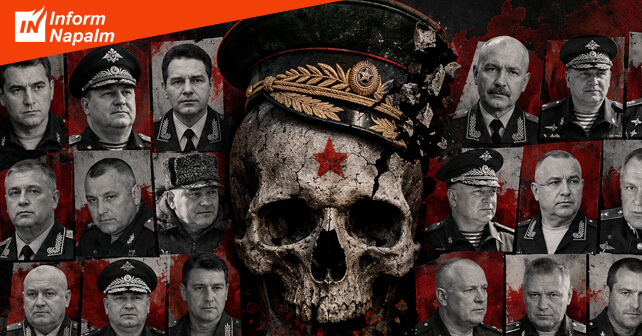
As of September 16, 2026, InformNapalm has counted 16 confirmed deaths of Russian generals linked to the full-scale war against Ukraine and military service during this period. Of these, 14 were active generals at the time of their death, and two were retired generals who had returned to the war.
Ten years after the first “Funeral March”
In 2016, InformNapalm published a detailed timeline The Russian Generals’ Funeral March (Statistics and Infographics V 2.1). At the time, volunteers collected cases of mysterious deaths of Russian generals and admirals and presented distinctive “statistical spikes” in an infographic. A significant share of these spikes coincided with periods of Russian military campaigns or the periods immediately following them.
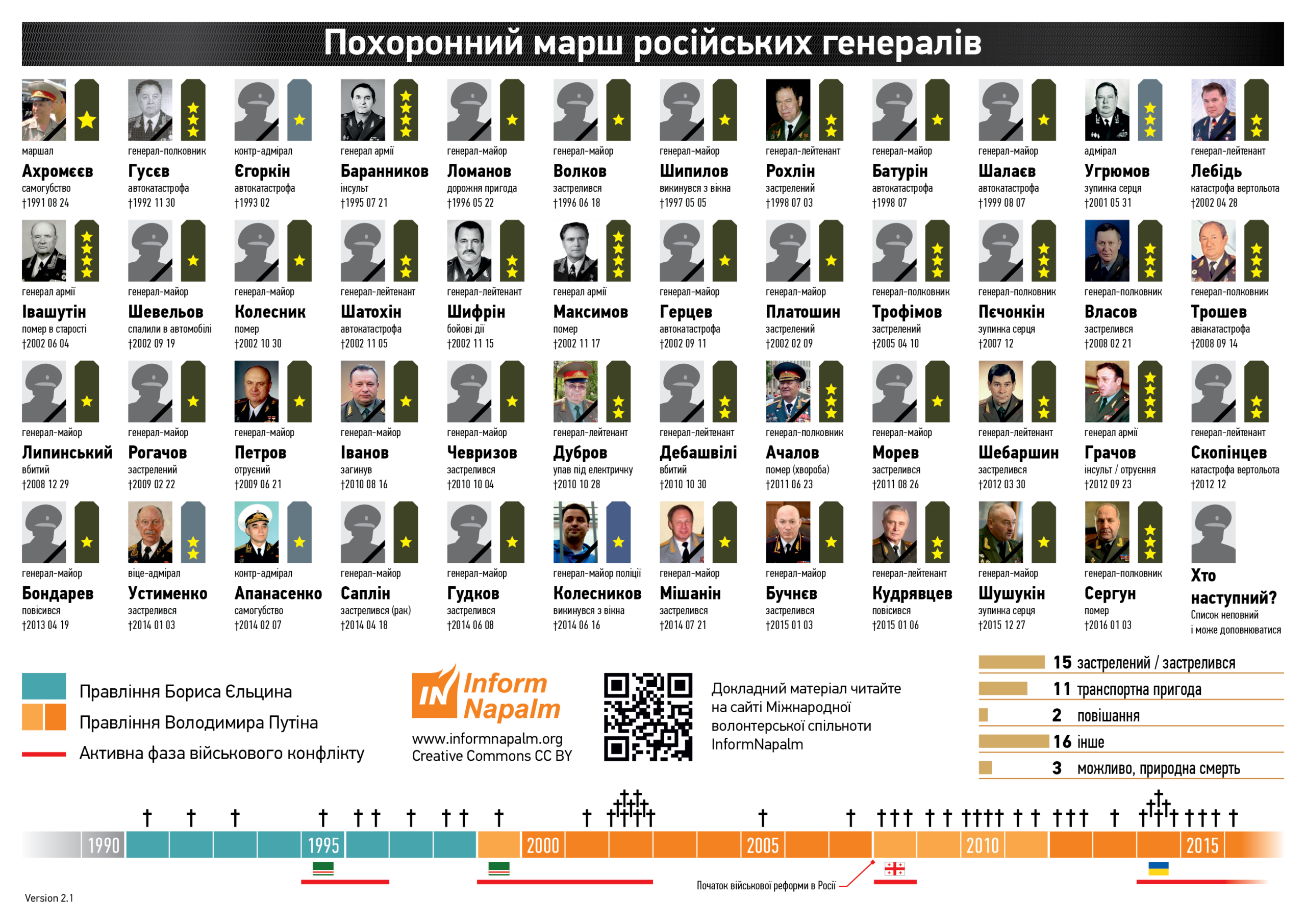
Notably, in 2021, this five-year-old publication, which was available in 12 languages, attracted particular attention from Russia’s media watchdog Roskomnadzor. Russian authorities officially demanded that InformNapalm remove it from its website, but were sent packing.
Ten years later, we are returning to the subject — this time with a timeline of Russian generals who have faced the consequences of Russia’s full-scale aggression against Ukraine.
How we count casualties among the generals Methodology
The main list includes only those cases where death is confirmed through official reports, relatives, burials, state registries, or a combination of independent sources. This criterion is essential: in 2022, Ukrainian and international media also published erroneous reports about the deaths of individual Russian generals.
For verification purposes, we use, in particular, the general joint name database of the BBC Russian Service, Mediazona, and a team of volunteers. Mediazona compiles it from open, verified sources, including statements by relatives, regional media reports, official sources, burial records, and other documentary evidence.
At the time of writing, Mediazona’s statistics also included 16 generals: five lieutenant generals, eight major generals, two retired generals, and former Ukrainian Security Service major general Volodymyr Liapkin, who fled to Russia and fought on its side. We do not include the latter in the Russian general corps. After the verification of Anton Grunis’ death on September 16, our body count of Russian generals grew to 16.
Timeline of the Russian dead generals
2022
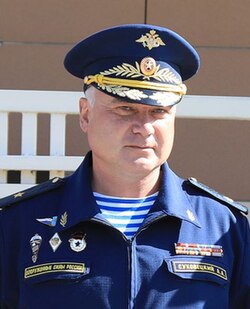
February 28 – Major General Andrei Sukhovetsky, Deputy Commander of the 41st Combined Arms Army. Killed during combat operations in Ukraine. He became the first reliably confirmed Russian general killed after the start of the full-scale invasion.
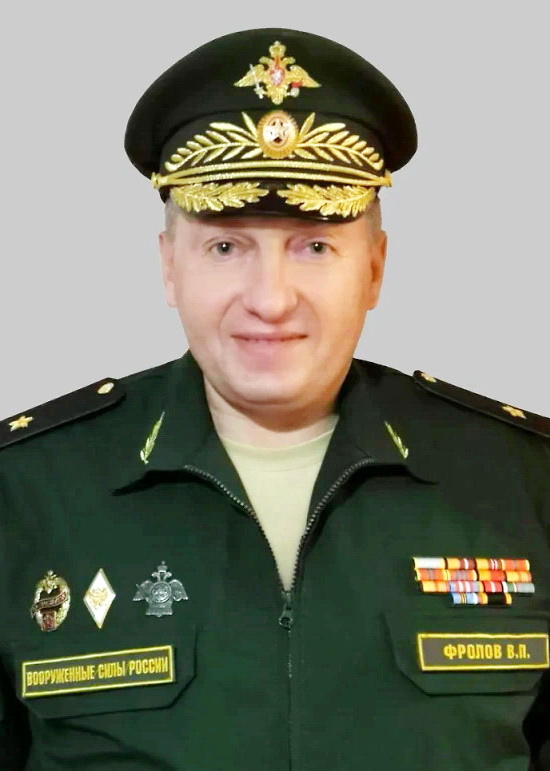
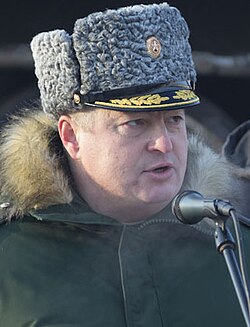
March 10 – Major General Vladimir Frolov, Deputy Commander of the 8th Combined Arms Army. The date of his death was confirmed through documentary evidence; Frolov was buried in St. Petersburg in April.
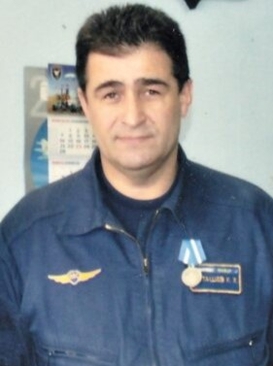
May 22 – retired Major General Kanamat Botashev. A former Russian military aviation general, he returned to combat flying after retirement. His Su-25 was shot down over Ukraine. According to investigative journalists, he was linked to the Wagner PMC during the war.
2023
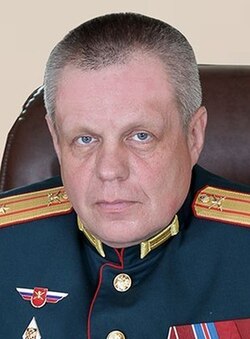
June 12 – Major General Sergei Goryachev, chief of staff of the 35th Combined Arms Army. Killed on the Zaporizhzhia axis. His death was subsequently further confirmed by his burial in St. Petersburg.
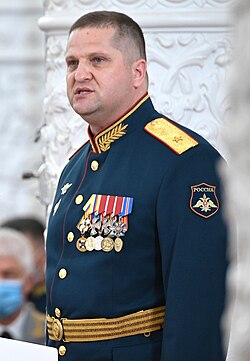
July 11 – Lieutenant General Oleg Tsokov, Deputy Commander of the Southern Military District. Killed in a strike on a Russian command post near occupied Berdiansk.
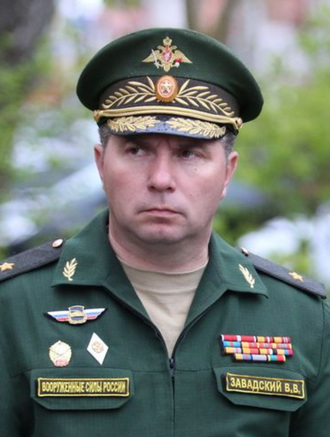
November 28 – Major General Vladimir Zavadsky, Deputy Commander of the 14th Army Corps. Killed in temporarily occupied Ukrainian territory; his death was subsequently officially confirmed by Russian regional authorities. OSINT dossier.
2024
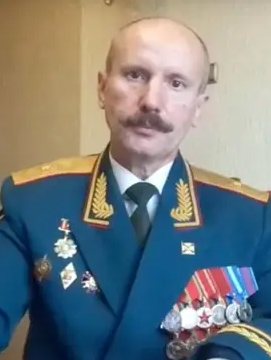
June 30 – Major General Andrey Golovatsky, retired. Former first deputy chief of staff of the North Caucasus Regional Command of the Russian Interior Ministry’s Internal Troops. Mediazona confirmed his death through an obituary and Russia’s inheritance-case registry.
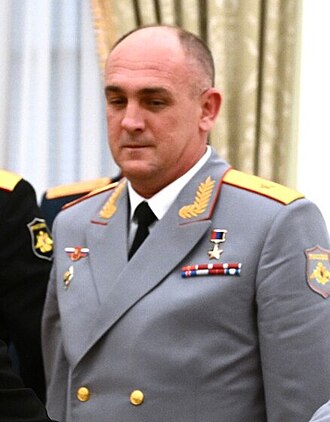
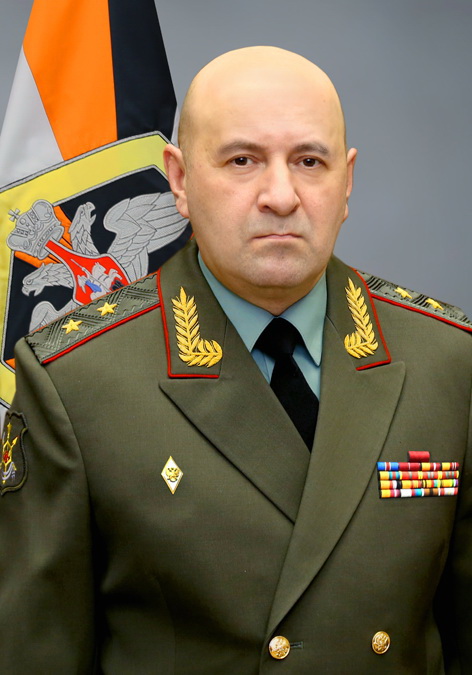
November 6 – Major General Pavel Klimenko, commander of the 5th Motorized Rifle Brigade. According to available information, he sustained fatal injuries in an FPV drone attack; Russian sources confirmed his death.
2025
April 25 – Lieutenant General Yaroslav Moskalik, Deputy Chief of the Main Operations Directorate of the Russian General Staff. He was killed in Balashikha, near Moscow, after a car was blown up near his home.
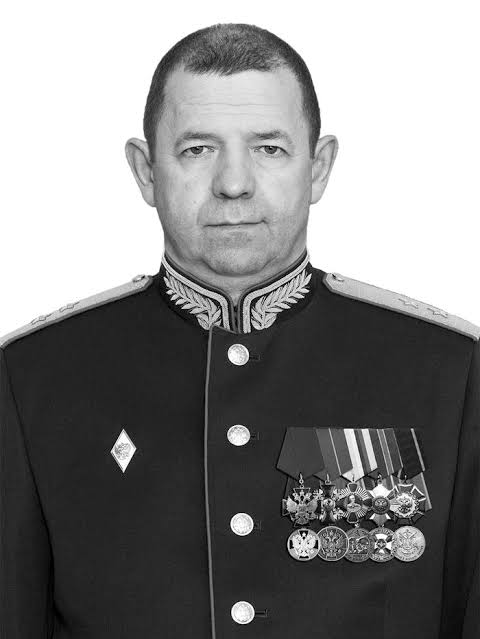
July 2 – Major General Mikhail Gudkov, Deputy Commander-in-Chief of the Russian Navy for coastal and ground forces and former commander of the 155th Naval Infantry Brigade. Killed in a strike on a Russian command post in Kursk Oblast.
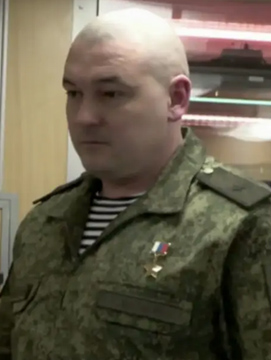
December 22 – Lieutenant General Fanil Sarvarov, head of the Russian General Staff’s Operational Training Directorate. Killed in Moscow when an explosive device detonated under his car.
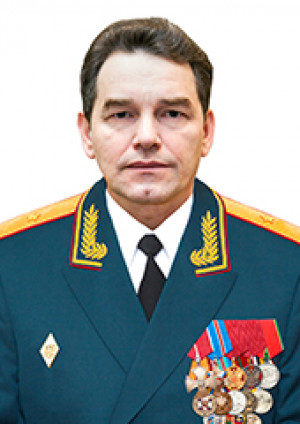
2026
March 31 – Lieutenant General Alexander Otroshchenko, commander of the Northern Fleet’s Mixed Aviation Corps. He was on board the Antonov-26 military transport plane that crashed in occupied Crimea. This was a confirmed non-combat death of a serving Russian general while on military duty.
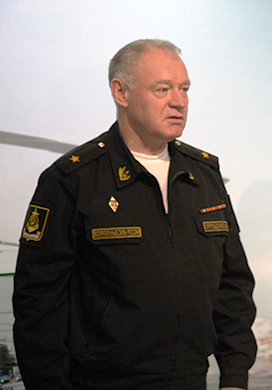
August 1 – Major General Valeriy Plokhotnyuk. Russian government registry data and his subsequent burial at Moscow’s Troyekurovskoye Cemetery confirm his death on August 1. The date coincides with an explosion at the Balzi Rossi restaurant in Moscow, where a closed event involving senior Russian military personnel was held. However, Russia has not officially disclosed the circumstances of Plokhotnyuk’s death.
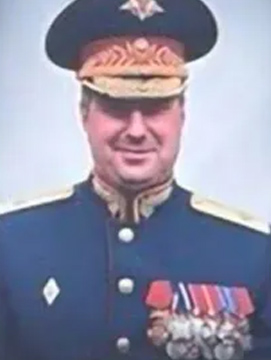
September 12 – Major General Anton Grunis, commander of the 4th Motorized Rifle Brigade of the Russian Armed Forces. His death became one of the most promptly and thoroughly documented cases in this timeline.
The first indirect reports from the Russian Z-community appeared several days before the final verification. By the night of September 16, major Russian pro-war sources were already confirming Grunis’s death without reservation, and Lieutenant General Apti Alaudinov publicly confirmed it that morning.
On September 16, Robert “Magyar” Brovdi, commander of Ukraine’s Unmanned Systems Forces, officially reported the exact circumstances and released footage of the strike. Grunis was liquidated on September 12 in the temporarily occupied territory of Donetsk Oblast, at a deployment site. The strike was carried out by servicemen of the Rarog unit of Ukraine’s Unmanned Systems Forces.
Thus, the OSINT chain was effectively traced almost in real time: from the first anonymous reports of the death of a high-ranking military officer—through Russian obituaries and confirmations from a serving Russian lieutenant general—to the establishment of the exact date and the publication of footage of the strike itself.
Interestingly, Grunis had previously appeared in an InformNapalm investigation, List-1097: How the Russian 18th Brigade occupied Crimea.
His surname appeared in an extract from Order No. 53 dated March 14, 2014, among servicemen who had been deployed to carry out a “combat mission” and were issued field rations for March 16–18. This period directly coincided with the final stage of Russia’s operation to seize Crimea.
Over the following 12 years, Grunis rose to the rank of major general and became a brigade commander. He was killed shortly after receiving the title of Hero of Russia.
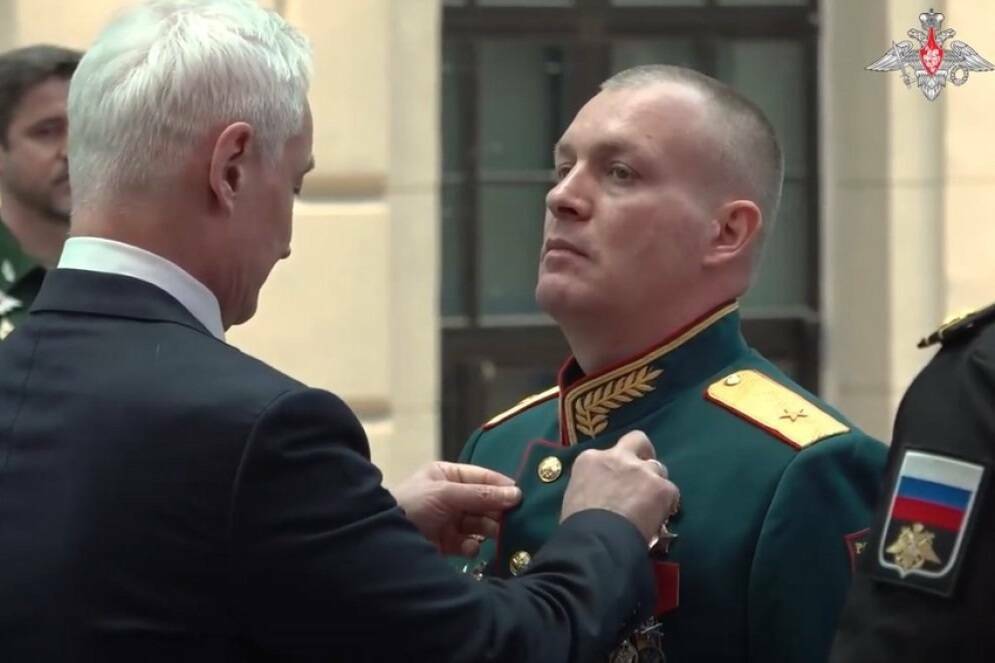
Assassination attempts on surviving generals
Separate from the death statistics, we record confirmed and probable assassination attempts against Russian generals. This section will also be updated:
- Vladimir Alekseev, February 6, 2026 The First Deputy Head of the Main Directorate of the General Staff of the Russian Federation was shot several times in the entrance hall of his apartment building in Moscow. He was seriously injured but survived.
- Azatbek Omurbekov, April 28, 2026. Following an explosion at a military garrison in Khabarovsk Krai, Russian sources identified Major General Omurbekov as a possible target. InformNapalm was the first to identify Omurbekov in April 2022 as a war criminal and commander of the 64th Motorized Rifle Brigade, which committed war crimes in Bucha.
- Alexander Chaiko, August 1, 2026. The explosion at the Moscow restaurant Balzi Rossi occurred during a closed event associated with Colonel General Chaiko. He himself survived; Russian authorities called the explosion a terrorist attack, but did not confirm that Chaiko was the target.
- Nikolai Varpakhovich, September 3, 2026. A gunman fired several shots, but the general reportedly survived. A more detailed OSINT dossier on him is available on the InformNapalm website. His condition is being monitored.
From the front to the Russian rear
The timeline shows a gradual change in the nature of losses. During the first years of the full-scale invasion, Russian generals predominantly died directly in combat areas — on the frontline, at command posts, or during combat missions. From late 2024 onward, targeted attacks in Moscow and Moscow Oblast were added to this pattern. In 2026, we have seen both acts of sabotage and assassination attempts against generals deep inside Russia, as well as successful strike operations by Ukraine’s Defense Forces against Russian headquarters in the combat zone.
This timeline is neither a closed nor a complete list and will be updated as new verified information becomes available.


Read more related material from InformNapalm
- Walking the Path of Fire: Twelve Years of InformNapalm’s War Against the Kremlin
- Ukrainian hackers uncover how Russian drone operators are using Belarus
- OKBMLeaks: classified documents from a Russian components manufacturer for Su-57 fighter and PAK DA Poslannik next-gen bomber
- CYBINT operation against the Gonets satellite system, dubbed “Russia’s equivalent of Starlink”
- Wildberries caught in the crossfire of drone strikes and cyber operations
- Ten years later: from OSINT detection to target destruction. Ukrainian Navy hits Russian Bastion missile system in temporarily occupied Crimea
- Hacktivists uncovered new classified documents from STC, Russian manufacturer of Orlan-10 drones
- CYBINT. Hacking Russian UAV manufacturer. Part 1: who assembles Geran-2?
- AlabugaLeaks. Part 2: Kaspersky Lab and neural networks for Russian military drones
- AlabugaLeaks. Part 3: Albatross, war, NVIDIA, Sony and Saito
- The Russian drone threat 2026–2027: Ukraine’s lessons for NATO