
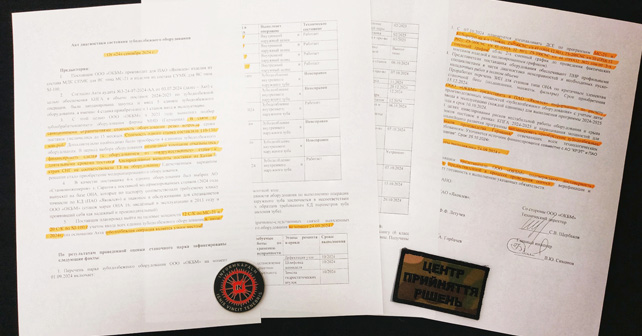
In September 2022, the CYBINT group Decision-Making Center, part of the InformNapalm volunteer intelligence community, obtained internal documents from several Russian enterprises and corporations under sanctions by the European Union and the United States. These documents provide source data for systematic monitoring of internal workflows to identify and disrupt supply chains for critical equipment to Russia.
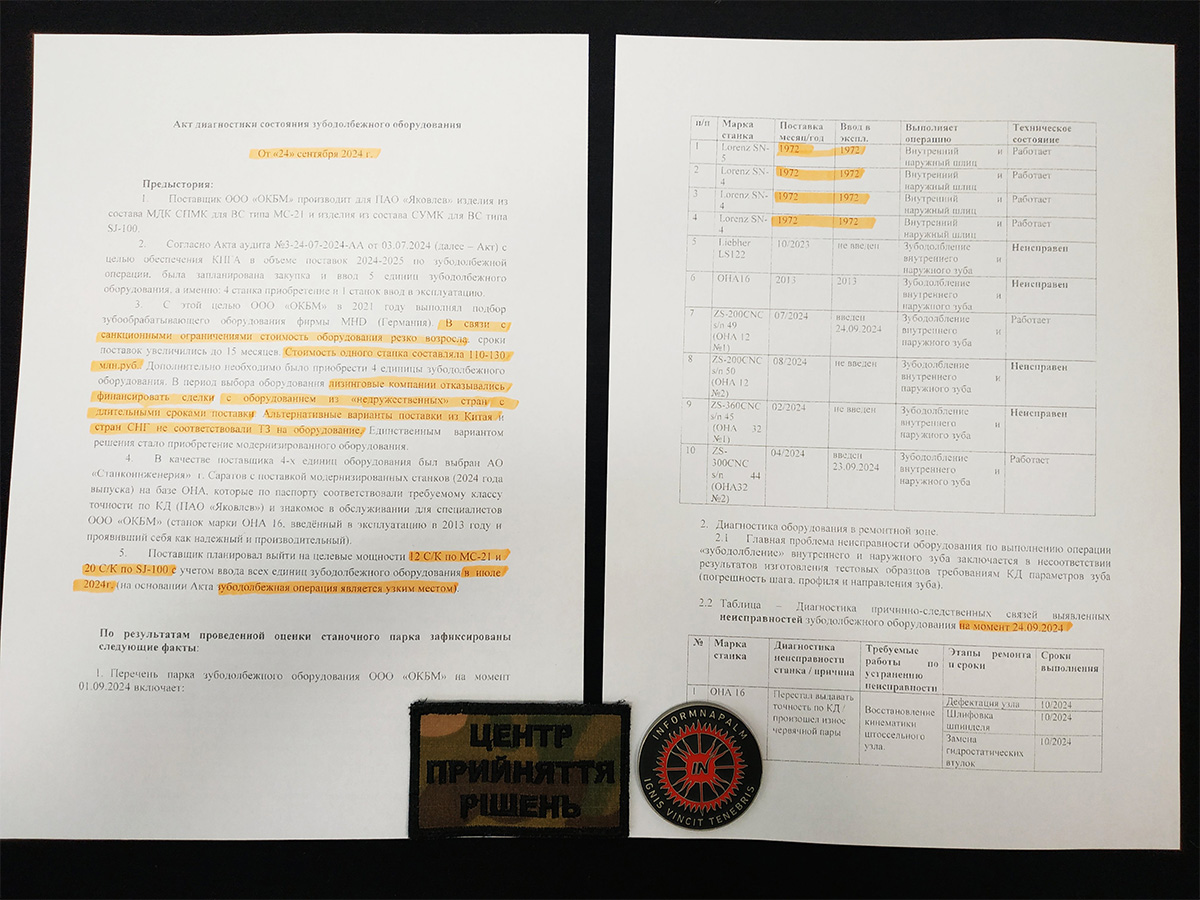
This article presents one such document, dated September 24, 2024, titled “Diagnostics report on gear-shaping equipment,” prepared by the Russian enterprise, which collaborates with the aircraft manufacturing concern JSC Yakovlev.
Until July 2023, Yakovlev was known as Irkut and is part of the Russian United Aircraft Corporation. It is responsible for designing the MC-21 and SJ-100 aircraft. Following Russia’s full-scale invasion of Ukraine, Yakovlev has faced sanctions from 27 EU countries, the United States, and several other nations.
The Kremlin promotes these aircraft as symbols of import substitution and independence from Western technology. However, the leaked documents reveal a starkly different reality: Russia’s aviation industry relies heavily on outdated Soviet-era equipment and defective modernized Russian substitutes due to restricted access to Western technologies.
Bottleneck in Russian aviation
Gear-shaping machines are essential for producing gears and gearboxes in aircraft manufacturing, as they enable the production of critical engine and transmission components.
The diagnostic report highlights several issues:
- Most machines, dating from 1972 Soviet production, have exceeded their service life.
- Modern German machines, such as MHD, are unavailable due to sanctions.
- Alternative procurement attempts from China and the CIS countries failed to meet quality requirements.
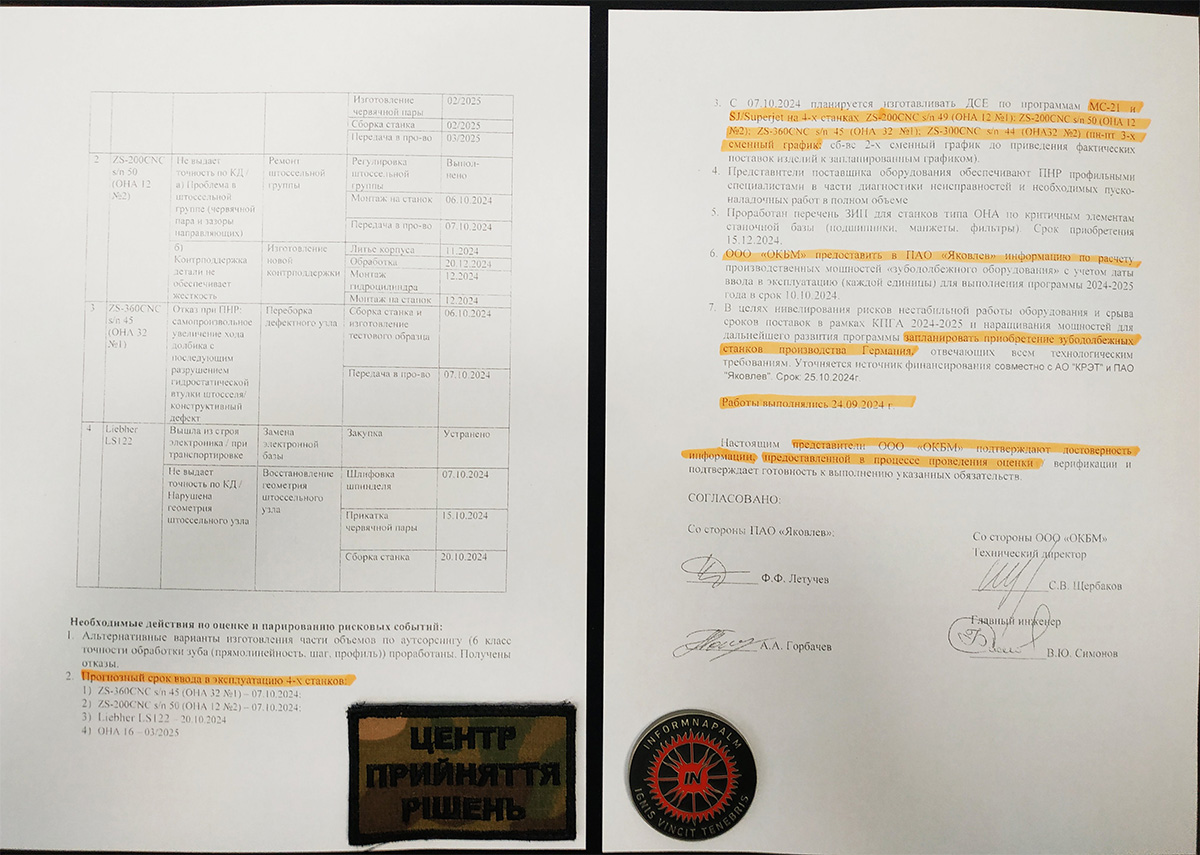
- Modernized machines from Saratov, Russia, were found to be defective or of low quality.
The report notes that several machines, including Liebherr LS122, ZS-200CNC, and ZS-360CNC, never became operational due to significant malfunctions discovered upon delivery.
Delays and program setbacks
The commissioning of these machines has been delayed until October 2024–March 2025, causing inevitable setbacks in the production of MC-21 and SJ-100 aircraft, which the Kremlin touts as a technological breakthrough.
To mitigate equipment shortages, factories plan to operate in two to three shifts. However, this approach carries high risks of breakdowns and substandard quality.
“Gear-shaping remains a critical bottleneck in the production of gear systems for the aviation industry.” – the document states.
Impact of sanctions
The diagnostic report confirms the effectiveness of Western sanctions:
- Delivery times for imported equipment have extended to 15 months or more.
- Costs for modern machines have risen sharply, and banks refuse to finance transactions with countries deemed unfriendly.
- Russia’s industry has failed to produce competitive alternatives, and its modernized machines have proven unreliable.
Conclusion
This document underscores several key points:
Russia’s military-industrial complex remains critically dependent on Western technologies.
Sanctions effectively target vulnerabilities in Russia’s defense industry.
Kremlin’s claims of import independence are mere propaganda.
InformNapalm will continue to publish documents from this dataset to expose the true state of Russia’s aviation industry and other sectors of its military-industrial complex.
We urge journalists and analysts to share this material to reveal the reality behind the Kremlin’s propaganda.
Follow InformNapalm’s news section for further updates, with more disclosures to come.


- Patreon
- BuyMeACoffee
- USDT TRC-20: TUbRscbCFns4kvWbUnQRBow9ajxSXwxFJU
- Ethereum: 0xf8979c0e0f82EaF1E79704Eb10b750906868cb72
- Bitcoin: bc1qj6nmqwc75tkwv5zuq4x8ljq94xwqp2msf5kyv3