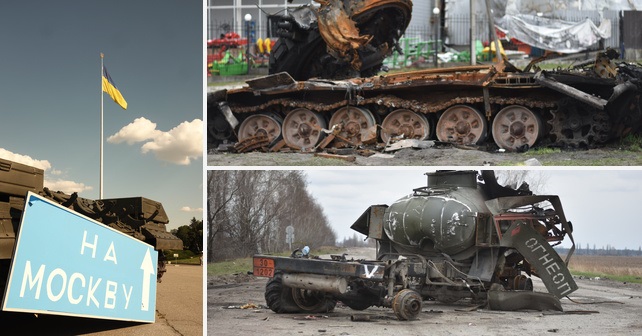
Russia has substantially increased its weapons production since the invasion of Ukraine in 2022. Behind the high volume of deliveries, however, lie growing industrial and economic problems. Growth is slowing as stocks of older Soviet-era combat vehicles are being depleted. The Russian defence industry can still supply substantial quantities of weapons, but a shortage of investment, skilled labour and advanced manufacturing equipment is making further expansion of production more difficult.
On 15 July 2026, Rostec chief executive Sergei Chemezov presented the industrial conglomerate’s financial results at a meeting with Russian Prime Minister Mikhail Mishustin. Revenue had increased by 25 per cent in 2025, but net profit had fallen by 42 per cent to 76.4 billion roubles. Chemezov also acknowledged that the state-owned conglomerate lacked sufficient funds of its own to finance new investment projects. The Ukrainian defence news outlet Militarnyi reported on the results on 2 August 2026.
Behind Russia’s increased weapons deliveries
Rostec is one of the most important corporate groups in Russia’s defence industry. The conglomerate includes manufacturers of combat vehicles, aircraft engines, electronics and advanced weapons systems, among other products. Its financial results are therefore important for understanding the conditions underpinning Russia’s military production. Higher revenue, however, does not necessarily mean that more new weapons have been manufactured. Rising costs, repairs and upgrades to existing materiel also affect companies’ financial results.
In a report published by the Center for European Policy Analysis (CEPA) on 10 November 2026, researchers Mathieu Boulègue, Federico Borsari and Pavel Luzin distinguish between new production and the refurbishment of older equipment. Throughout the war, Russia has been able to maintain deliveries by combining the manufacture of new weapons with extensive repairs and modernisation. At the same time, this has made the defence industry increasingly dependent on older materiel that cannot be replaced once stocks have been exhausted.
Soviet-era weapons stockpiles have sustained production
At the time of the full-scale invasion of Ukraine in February 2022, Russia had large stocks of Soviet-era tanks, infantry fighting vehicles and other military vehicles. Some could be brought into service after relatively minor repairs. Others required extensive refurbishment or modernisation. By restoring older materiel, Russia was able to replace some of its losses in Ukraine without having to manufacture as many new vehicles.
According to CEPA, Russia has withdrawn nearly 15,000 older armoured vehicles from storage. The estimate is based on publicly available information and previous OSINT investigations and covers tanks, infantry fighting vehicles and armoured personnel carriers. The researchers estimate that between 7,500 and 8,200 vehicles remain, but that only around 4,790 may be suitable for refurbishment. These figures are estimates because comprehensive information on the contents of the storage facilities is unavailable.
In 2025, the combined total of newly manufactured and refurbished Russian armoured fighting vehicles was estimated at 3,700. According to CEPA, only around one third were newly manufactured. The majority were older vehicles that had been repaired or modernised before being returned to service.
The limitations of materiel reserves
Analyst Alexander Golts also describes how Russia’s Soviet-era weapons stockpiles have declined sharply over the past four years of war. In a report published by the Stockholm Centre for Eastern European Studies (SCEEUS) on 7 July 2026, he concludes that Russia’s existing production system is approaching the limits of what it can deliver. To increase capacity further, Russia would need to build new production facilities, improve access to components and spare parts, and undertake extensive organisational changes within the industry.
Dwindling stocks do not mean that the Russian Army’s operational capabilities will automatically deteriorate at the same rate. CEPA points out that refurbishment, new production and changes in tactics have made it possible to rebuild a substantial proportion of the vehicle fleet. However, the quality of the refurbished materiel varies, and stocks of older vehicles cannot serve indefinitely as a substitute for new production.
Rostec’s financial performance reveals growing constraints
Since 2022, the Russian state has committed very substantial resources to the war economy. The defence industry has received more orders, factories have extended working hours and previously unused production capacity has been brought into operation. This has helped increase weapons deliveries to the armed forces. At the same time, companies have found it increasingly difficult to finance the investment needed to expand their operations.
On 11 November 2026, economist Vladimir Milov published the report Running on Fumes: Russian Military Industry Under Pressure for the Free Russia Foundation. He has examined publicly available statistics from Russia’s Rosstat, financial data from industrial companies and state-owned banks, and statements by defence industry representatives.
According to Milov, Rostec’s revenue had more than doubled between 2021 and 2025, but its net profit margin had fallen to less than two per cent. Low profitability makes it difficult for the conglomerate to finance new factories, machinery and production lines from its own funds. State defence orders generate substantial revenue for companies but do not guarantee that funds are available for long-term investment.
Rosstat’s statistics also show that investment has fallen sharply across several industrial sectors. According to Milov’s analysis, investment in Russia’s electronics and optics industry fell by 42.5 per cent in the second quarter of 2026 compared with the same period in 2025. In the fabricated metal products category, which includes weapons and ammunition, the decline was 26.9 per cent.
The statistics also cover some civilian production and therefore do not show precisely how investment in the defence industry has changed. Nevertheless, the decline affects industrial sectors that are important to the manufacture of military materiel. If investment continues to fall, replacing worn-out machinery while expanding production will become more difficult.
Financing and attacks on the oil industry
High financing costs and a shortage of skilled personnel are also creating difficulties for companies. According to Vladimir Milov’s analysis, nominal wages in the Russian defence industry had more than doubled between 2021 and mid-2026. Rising labour costs are increasing pressure on companies that also need to invest in new production capacity. Manufacturers with substantial state defence orders must still be able to pay for raw materials, electronics, machined components and spare parts. If subcontractors struggle to finance their purchases, the entire production chain may be affected, even when the final manufacturer has a large volume of orders.
Meanwhile, Ukraine continues to attack Russian oil infrastructure. On 5 November 2026, information from Ukraine’s military intelligence service concerning the impact on Russia’s oil refineries was made public. According to the intelligence service, 15 of Russia’s 38 major refineries had ceased operations by the end of September, while a further 12 had reduced production. Refining volumes at the affected facilities had fallen by 55.4 per cent compared with the beginning of the year.
Reuters reported on 10 November that the latest wave of Ukrainian attacks had affected refineries that together accounted for around 30 per cent of Russia’s nominal refining capacity. The disruptions restrict fuel supplies, complicate exports of petroleum products and increase the cost of repairs and other measures to maintain supplies.
According to preliminary figures from the Russian Ministry of Finance, state oil and gas revenues fell by 14.1 per cent between January and October 2026 compared with the same period in 2025. The decline was also influenced by the rouble’s exchange rate and increased state compensation payments to refineries and cannot therefore be attributed solely to Ukrainian attacks on refineries. The attacks place additional strain on a sector of considerable importance to public finances at a time when the Russian state budget is already under pressure.
Dependence on foreign machine tools persists
Advanced machine tools are essential for manufacturing combat vehicles, missile engines and other military systems. Computer-controlled milling machines, lathes and similar equipment are required to machine metal and manufacture components to a high degree of precision. Russia’s limited access to such equipment is therefore a significant problem for its defence industry.
Russia has long been dependent on imported machine tools. According to CEPA, until the late 2010s, up to 90 per cent of the machine tools and associated spare parts used in Russia were imported. Supplier countries included Germany, Switzerland, Italy, Japan, Taiwan and the United States.
Dependence on imports persists despite efforts to replace Western equipment following the invasion of Ukraine. In an interview with the Russian magazine Expert in March 2025, Rostec chief executive Sergei Chemezov stated that imports accounted for up to 70 per cent of the Russian machine tool market. The figure is cited in the Free Russia Foundation’s study, which also describes the difficulties of replacing Western machinery with Russian or Chinese alternatives.
InformNapalm’s investigations into import dependence
InformNapalm has previously investigated the dependence of Russian defence companies on foreign manufacturing equipment. MikropriborLeaks, published in November 2024, disclosed internal information about the machinery at the Mikropribor factory, which manufactures components for the Su-57 fighter aircraft. Of the 29 types of production equipment that were no more than five years old, 18 were of foreign origin.
In OKBMLeaks, published in November 2025, InformNapalm released internal documents from the component manufacturer OKBM. The company has links to both the Su-57 and the planned PAK DA Poslannik strategic bomber. Among other things, the documents describe production constraints arising from the availability of imported precision machinery. The investigations show how dependence on foreign technology affects the manufacture of advanced military systems.
Acquiring new machinery is not enough. Factories operating multiple shifts must be able to maintain their equipment and obtain spare parts when components wear out. If an older machine is replaced with a different model, the manufacturing process may need to be modified. This, in turn, may require staff training and new quality control procedures.
Chinese supplies have partly replaced Western equipment that has become more difficult to obtain. According to CEPA, China’s share of machine tool supplies to Russia increased from around 13 per cent in 2017 to between 80 and 90 per cent after 2022. Dependence on imports has thus shifted largely from Western suppliers to China. This has not, however, resolved all the problems associated with advanced precision machining. Western export restrictions are also only part of the explanation for the industry’s difficulties. Russia was already dependent on imported technology before the invasion, while high costs and limited domestic manufacturing capacity have continued to impede development. The entire decline in investment or production cannot therefore be attributed to sanctions.
The difference between production plans and actual capacity
The Russian authorities often report how many weapons and vehicles have been delivered to the armed forces. However, it is not always clear what proportion is newly manufactured and how much consists of modernised or refurbished materiel. A large number of tank deliveries therefore does not necessarily mean that an equivalent number of new tanks have left the factories.
In an academic study published in the European Journal of International Security on 16 February 2026, researchers Oldřich Krpec, Martin Chovančík and Adriana Ilavská examine how Russian production figures can be compared with expert assessments and visually documented equipment losses. Using their model, they estimate the production of new tanks at around 150 vehicles in 2022 and 300 in 2024. These are model-based estimates, not directly measured production figures. The study demonstrates why information from open sources needs to be assessed in combination when evaluating the industry’s actual output. Official claims of increased deliveries cannot simply be taken as a measure of new production.
The T-90M tank is one example. CEPA estimates that the manufacturer Uralvagonzavod was producing between 250 and 300 new T-90M tanks annually around 2024. The report also refers to documents examined by the Ukrainian analytical group Frontelligence. According to these documents, Russia plans to build 765 new T-90M variants and produce a further 347 T-90M tanks through refurbishment and modernisation between 2027 and 2029. This amounts to just over 1,100 vehicles in total, but the documents do not establish whether the plans can be implemented.
Production targets and actual deliveries
A planned increase in production is not the same as an actual increase. State orders show how many vehicles or weapons systems the Russian leadership wants delivered, but not whether factories have the capacity to meet those requirements. This requires sufficient personnel, machinery, components and funding.
Despite its economic and technical problems, Russia’s defence industry has continued to produce large quantities of weapons. A report published by the Center for Strategic and International Studies (CSIS) on 14 July 2026 examines Uralvagonzavod, Almaz-Antey, KRET, Kalashnikov and the drone manufacturer Ushkuynik, among others. The researchers assess that Russia is likely to be able to maintain a high rate of production in certain weapons categories.
Conditions differ, however, across the defence industry. Production of drones and certain missile systems may continue to increase, while other advanced systems are constrained by expensive components, insufficient investment and difficulties replacing older production equipment. The problems are therefore substantial, without the industry as a whole having lost its ability to supply weapons.
The war industry’s ability to sustain production is becoming increasingly important
Russia has been able to increase weapons production and replace substantial materiel losses during the war in Ukraine. This has been achieved through extensive state orders, longer working hours at factories and the refurbishment of older Soviet-era materiel. But increased deliveries also come at a cost. Weapons stockpiles are dwindling, investment has declined across several important industrial sectors and dependence on advanced foreign manufacturing equipment persists.
The fact that the industry can still supply large quantities of weapons does not mean that production capacity can continue to grow indefinitely. Repairs and modernisation can compensate for some losses, but stocks of older materiel are finite. Longer working hours can increase output without increasing the number of factories or machines. Sooner or later, the shortage of investment and new production capacity will therefore become more significant.
Official delivery figures alone are insufficient to assess Russia’s future military capabilities. Companies’ financial results, access to components, factory production capacity and the extent of the remaining materiel reserves are also crucial. A large number of weapons deliveries may conceal a growing dependence on repairs and older equipment.
There is insufficient evidence to claim that Russia’s defence industry is facing an imminent collapse. The studies do, however, indicate that maintaining the level of production built up since 2022 is becoming increasingly difficult and expensive. The scale of the impact on the war in Ukraine will depend, among other factors, on further materiel losses, changes in warfare and Ukraine’s ability to counter Russian weapons systems.
Further articles by InformNapalm
 The material may be freely shared and republished provided that the source is credited. Licensed under Creative Commons Attribution 4.0 International (CC BY 4.0). Follow us on Facebook, X, Telegram and Slate (Sl8).
InformNapalm receives no financial support from any government or institutional sponsor. Its activities are funded exclusively through voluntary contributions from individual volunteers and readers. Those wishing to contribute can do so by making monthly small donations through the BuyMeACoffee platform.