

On October 8, 2026, South Korea recalled its ambassador to Ukraine amid a diplomatic dispute over two North Korean prisoners of war. The move came as an international controversy was unfolding over fuel shipments to Russia from South Korean ports, including shipments carried by sanctioned tankers. Yet behind the diplomatic rift lies a far more serious issue. While Seoul walks a tightrope over whether to draw closer to Moscow or Kyiv, North Korea’s military, with Russian support, is systemically absorbing the combat lessons of modern warfare — experience it may one day use against South Korea itself.
Two POWs and a diplomatic demarche
On October 8, Reuters reported that Seoul had decided to recall its ambassador to Ukraine. The dispute centered on the public disclosure of the transfer of two North Korean servicemen captured by Ukrainian forces in Russia’s Kursk region in January 2025.
The prisoners were transferred to the Republic of Korea in mid-September 2026. On September 23, President Volodymyr Zelenskyy announced the transfer during an address to the UN General Assembly.
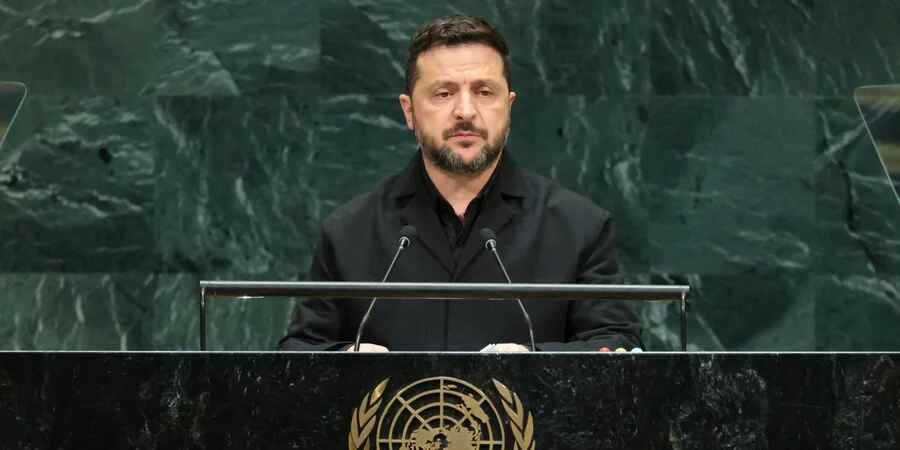
Seoul said the transfer was supposed to remain confidential, citing, among other concerns, potential risks to the servicemen and their families in North Korea. The Ukrainian side denied that such an agreement existed. After several rounds of diplomatic contacts, and with Seoul dissatisfied with the explanations it received, the dispute culminated in the recall of the ambassador. At the same time, South Korea’s Ministry of Foreign Affairs said it remained ready to continue talks with Kyiv.
Protecting the prisoners is a legitimate concern. However, the dispute has exposed a much broader problem in the relations between two countries that share a security interest: countering North Korea’s military strengthening through its cooperation with Russia.
As early as the autumn of 2024, South Korea had a rare opportunity to obtain practical insight into the military of its principal adversary.
What Seoul was considering back in 2024
On October 22, 2024, Yonhap news agency reported that the South Korean government was considering sending military and intelligence personnel to Ukraine to study the tactics, weapons, and combat capabilities of North Korean troops. Their possible participation in questioning future prisoners of war was also under discussion.
For Seoul, this was an unusual intelligence opportunity. For decades, South Korean intelligence had studied the North Korean military primarily from a distance — through satellite imagery, human intelligence reporting, military exercises, and testimony from defectors. Now there was an opportunity to observe North Korean units in an actual war, fighting an army that makes extensive use of FPV drones, electronic warfare (EW), artillery, and modern intelligence, surveillance, and reconnaissance systems.
At the time, Seoul was also considering revising its policy on supplying lethal weapons to Ukraine.
Yet over the following two years, that opportunity never materialized as a large-scale, publicly confirmed defense partnership.
South Korea’s National Intelligence Service (NIS) did cooperate with Ukrainian intelligence services in handling North Korean prisoners. South Korea also provided Ukraine with financial, humanitarian, and non-lethal assistance. However, there were no direct deliveries of lethal weapons.
Some intelligence cooperation may have remained classified. But the publicly available evidence is insufficient to conclude that Seoul made full use of the strategic opportunities created by North Korea’s participation in the war against Ukraine.
InformNapalm: from leaflets over Kursk to the first prisoners
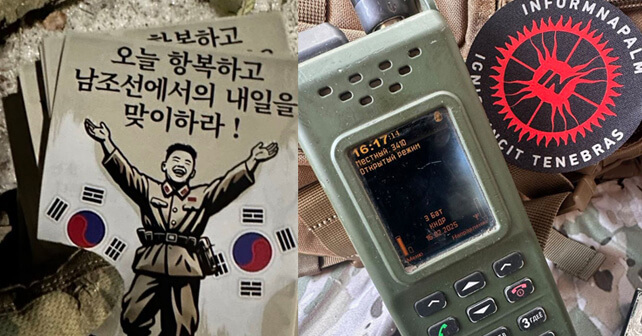
In December 2024, InformNapalm published footage received from Ukrainian servicemen showing drones dropping Korean-language leaflets over positions held by North Korean units in the Kursk region.
For North #Korean soldiers in the Kursk region, #Ukrainian drones bring not only death but also an offer to survive and start a new life as free individuals.
More info: https://t.co/v2IF8F5qKT https://t.co/b4NtYQDGos— InformNapalm (@InformNapalm) December 19, 2024
North Korean servicemen were urged to surrender, save their lives, and receive assistance in relocating to the Republic of Korea. The message went beyond simply calling on them to stop participating in the war: it offered the possibility of beginning a new life outside Kim Jong Un’s totalitarian system.
This was an attempt at direct information outreach to enemy troops who had been exposed to years of state propaganda and likely had only a limited understanding of actual living conditions in South Korea.
The campaign drew attention from South Korean media, including Yonhap news agency and News1TV.
At the time, InformNapalm argued that it was strategically advantageous for South Korea to support Ukraine with weapons while North Korea’s military potential could still be contained far from the Korean Peninsula.
There were also other attempts to encourage North Korean soldiers to lay down their arms and begin a peaceful life.
Військовий Південної Кореї 🇰🇷 зробив відеозвернення корейською мовою до військових #КНДР, що воюють проти України на боці РФ (субтитри українською).
Ми прагнемо дати шанс солдатам Північної Кореї зробити правильний вибір, вижити й здобути волю, якої у них ніколи не було.
Ми закликаємо дружні канали та ресурси долучитись до поширення цього відеозвернення, зі свого боку ми докладаємо максимум зусиль, щоб інформація дійшла до адресатів різними засобами, не тільки через інтернет, але і безпосередньо на полі бою.
#Korea #Ukraine
— InformNapalm (@InformNapalm) December 3, 2024
On January 11, 2025, Ukraine announced the capture of two wounded North Korean servicemen in the Kursk region by Special Operations Forces of the Armed Forces of Ukraine. Their capture brought new opportunities to obtain intelligence directly from the soldiers who had trained in the North Korean military and taken part in combat operations.
In January, InformNapalm also discussed the possibility of transferring such prisoners to South Korea and their potential value as sources of information on the North Korean military.
Another notable example was an archived InformNapalm publication from January 20, 2025, on improving Korean-language leaflets after feedback obtained from the first prisoners. Ukrainian servicemen adapted both the content and visual presentation of the materials in light of the new information.
In other words, this was no longer simply about distributing leaflets. It was an attempt to use newly acquired understanding to improve outreach to North Korean troops.
There is no evidence that the leaflets themselves caused any specific North Korean servicemen to surrender. But the campaign demonstrated capabilities that could have been expanded with the involvement of South Korean specialists.
Seoul gained access to unique experience accumulated by Ukrainian forces. The question is how fully it made use of it.
This is only a small part of the material InformNapalm has published on North Korean participation in the war against Ukraine. Searching the community’s Telegram archive for terms such as “КНДР” (DPRK) and “північнокорейські” (North Korean) brings up dozens of relevant posts, including unique footage from the Kursk region, evidence of North Korean troops taking part in combat, and material on POWs. We recommend the archive to anyone wishing to examine the subject in greater depth and follow developments chronologically.
The Kursk region became a live proving ground for North Korea’s military
The first months of North Korea’s participation in the fighting were marked by significant losses. Ukrainian servicemen documented massed infantry assaults and movement in dense groups that proved vulnerable to artillery and FPV drones.
However, North Korean units did not remain at the same level of training and adaptation.
In March 2025, Yonhap, citing the NIS, reported that North Korean troops in Russia were already training to operate drones.
Another revealing episode came from the testimony of one of the prisoners, who told South Korean lawmaker Yoo Yong-won about the use of Russian counter-drone systems and changes in their effectiveness as Ukrainian UAVs adapted.
On April 9, 2026, the Royal United Services Institute (RUSI) published a study in which author John Hemmings highlighted a shift by North Korean troops from large infantry formations to small tactical groups, the use of reconnaissance drones to adjust artillery fire, and the incorporation of lessons from the Kursk region into their military training.
At the same time, Pyongyang is developing its own drone industry and deepening military-technical cooperation with Russia.
On October 4, 2026, Reuters reported that, according to President Zelenskyy’s assessment, Moscow had transferred jet-powered strike drone technology to North Korea. The specific scale of any such transfers requires independent confirmation.
As a result, Pyongyang is gaining experience its military has not had for decades: not only in assault operations, but also in countering modern drones, employing electronic warfare, using unmanned reconnaissance, and coordinating different strike capabilities.
This is particularly concerning given the participation of North Korean special operations forces in the war. Such units are traditionally trained to infiltrate behind enemy lines, sabotage, and seize key facilities.
In the future, these skills could be used against South Korea — from drone attacks on military infrastructure to support for small assault and sabotage groups.
The Kursk region is, of course, not the Korean Peninsula. Seoul has a modern military, high-technology surveillance systems, and an alliance with the United States. It would therefore be wrong to assume that North Korea’s battlefield experience can be transferred directly to a future conflict.
But ignoring an adversary’s demonstrated tactical adaptation would be more dangerous still.
Seoul slams the door while tankers carry fuel to Russia
It is particularly striking that Seoul’s current diplomatic demarche comes amid another controversy — one that raises serious questions for South Korea itself.
On October 6, the British newspaper The Guardian published an investigation based on port documents and vessel-tracking data.
The journalists found that in July and August 2026 alone, more than 176,000 tonnes of petroleum products, mainly diesel, were shipped from South Korean ports to Russia. Seven tankers made 14 voyages to Russia’s Far East. Three of the vessels were under Western sanctions.
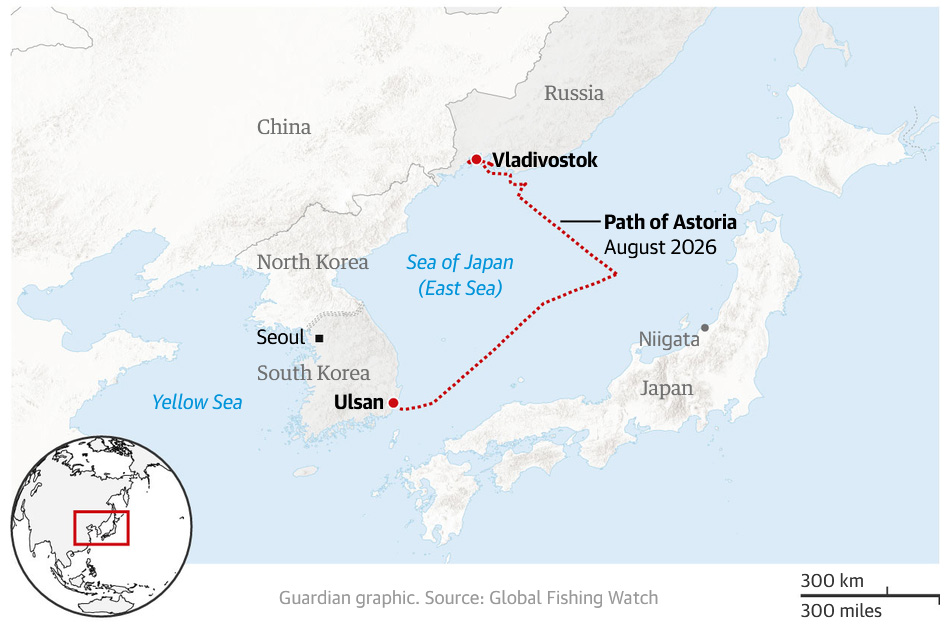
Among them was the tanker Layla, which transported diesel fuel twice from Ulsan to Vladivostok, carrying around 57,000 tonnes in total. On one voyage, the vessel declared the Japanese port of Niigata as its destination but in fact sailed to Russia.
Ship-to-ship fuel transfers were also recorded in South Korean waters.
According to the Ukrainian side, supplies from South Korea accounted for about 31% of Russia’s fuel imports in August.
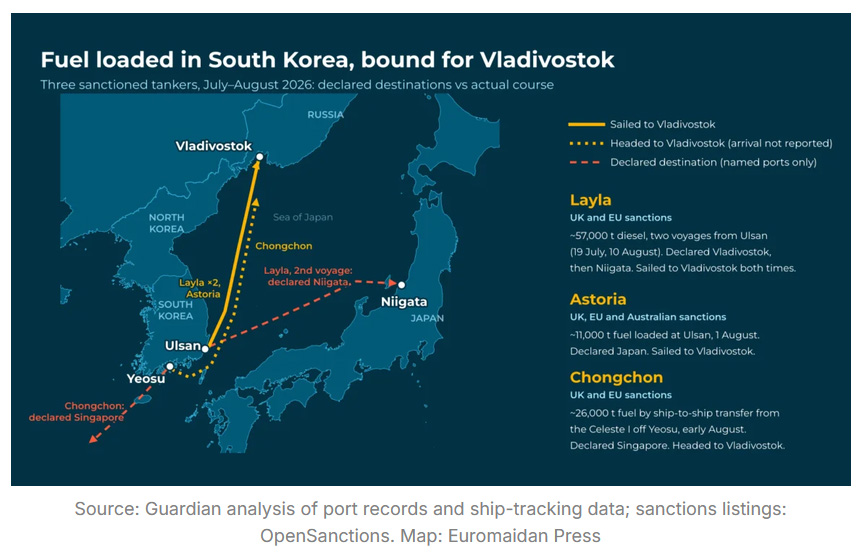
All of this was taking place as Ukraine systematically struck Russian oil-refining infrastructure and Moscow sought to compensate for fuel shortages.
The result is a paradoxical picture.
Ukrainian servicemen risk their lives to disrupt Russia’s fuel logistics. At the same time, substantial volumes of fuel are reaching Russia through South Korean ports, including aboard sanctioned vessels.
Seoul rejected accusations that it was facilitating sanctions evasion. South Korean authorities said the petroleum products in question were not covered by the country’s export restrictions and promised to investigate possible violations.
The available evidence does not establish that the South Korean government knowingly organized fuel supplies to Russia. It does, however, raise questions about the effectiveness of sanctions enforcement and about political responsibility for commercial activity that helps Russia offset the effects of Ukrainian strikes.
Against this background, Seoul’s decision to cast itself as the aggrieved party in its relations with Ukraine looks dubious, to say the least.
There is another important dimension. While Russia is receiving fuel from South Korean ports, it remains North Korea’s principal military partner.
Moscow uses North Korean ammunition and troops, while Pyongyang gains access to combat experience, Russian technology, and resources.
In effect, commercial activity that eases pressure on Russia indirectly helps preserve the resource base of a state that is strengthening South Korea’s principal military adversary.
Is that not a dangerous strategic contradiction?
Betting on Moscow instead of cooperation with Ukraine?
The current administration of President Lee Jae-myung is seeking to restore dialogue with Pyongyang and reduce tensions on the Korean Peninsula.
It cannot be ruled out that Seoul is also considering improved relations with Moscow in the hope of using Russia’s influence over Kim Jong Un.
There is no public evidence that such a calculation determined the ambassador’s recall or South Korea’s policy toward Russian trade. But if such a strategy is indeed being eyed, it carries obvious risks.
Trying to reach an understanding with the Kremlin on restraining North Korea would mean relying on a regime that is itself interested in strengthening Pyongyang militarily.
History has repeatedly shown that concessions to aggressive regimes, without effective deterrence mechanisms, do not curb their ambitions but only encourage them instead.
South Korea has another option: deepen military-technical and intelligence cooperation with Ukraine, which has already confronted North Korean troops directly on the battlefield.
Ukraine’s experience in countering drones, electronic warfare, small assault groups, and other elements of modern warfare may be no less important to Seoul’s security than traditional diplomacy.
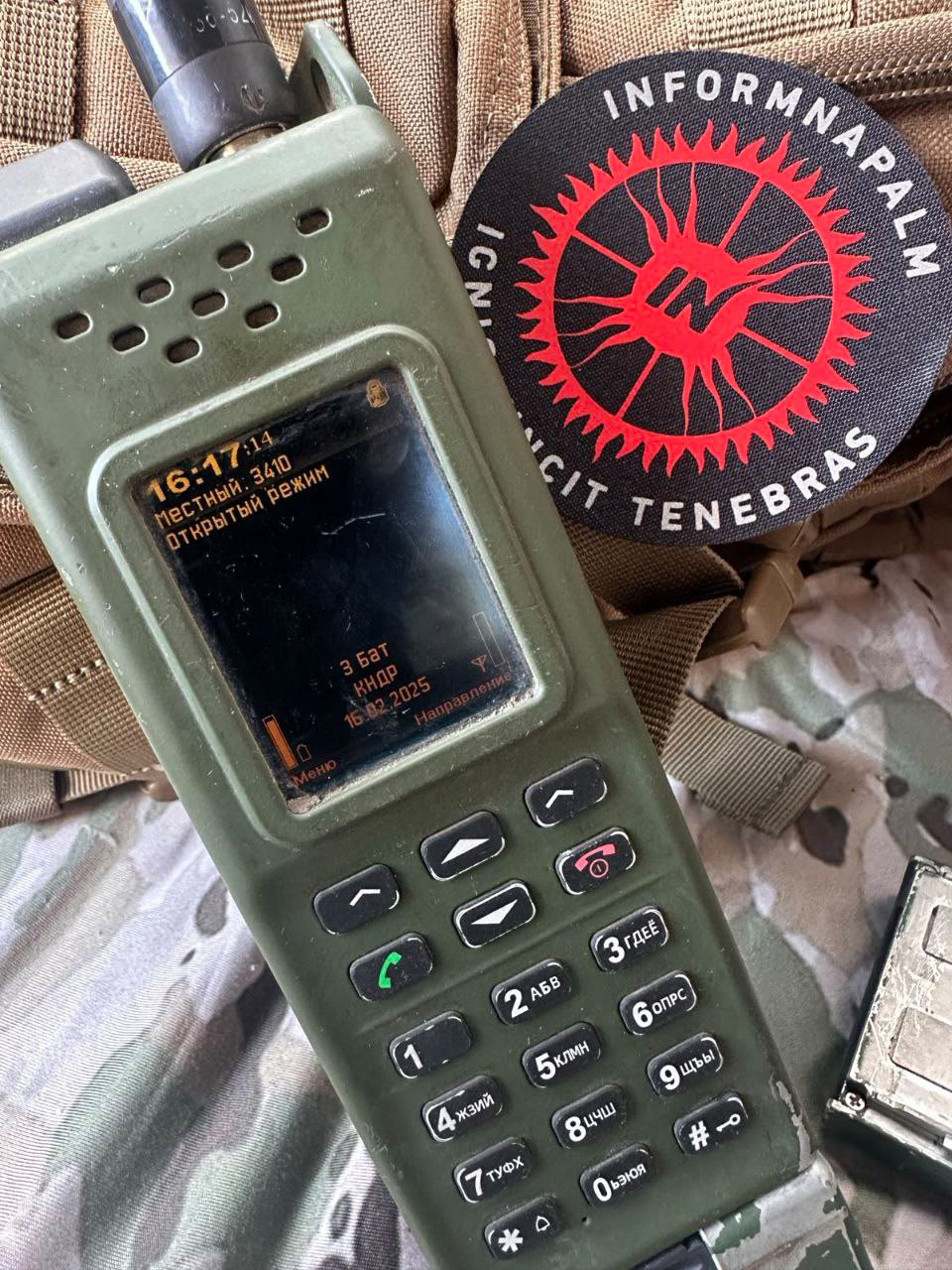
Photo: A captured Russian R-187-P1 Azart military radio found by operators of the Special Operations Forces of the Armed Forces of Ukraine on the bodies of North Korean servicemen killed in the Kursk region. InformNapalm exclusive.
InformNapalm’s conclusions
As far back as December 2024, InformNapalm highlighted the strategic benefits South Korea could gain from more actively supporting Ukraine. After the first North Korean prisoners of war were captured, we also emphasized their intelligence value.
Almost two years later, those arguments remain relevant.
Pyongyang has paid for its participation in the war with significant losses, but it has also gained the opportunity to test its military under real combat conditions, adapt its tactics, and accelerate the development of military technologies.
Seoul, too, gained valuable intelligence and opportunities for cooperation with Ukraine. Yet open sources do not provide sufficient evidence that this potential has been fully realized.
Now, instead of deeper cooperation against shared threats, we are seeing a diplomatic dispute over two POWs unfolding against the backdrop of a scandal involving fuel shipments to Russia through South Korean ports.
There is room to debate diplomatic protocol, confidentiality, and political grievances. But there is also a strategic reality that cannot be ignored.
Russia and North Korea continue to deepen their military partnership. Moscow receives soldiers and ammunition. Pyongyang receives combat experience, technology, and an opportunity to modernize its armed forces.
South Korea, meanwhile, risks underestimating the head start its adversary has gained in preparing for future military aggression. For Seoul, Kyiv could certainly prove a more reliable strategic partner in confronting an aggressor than behind-the-scenes assurances from Moscow.
Whether Seoul recognizes this in time — or only regrets it after North Korean forces begin applying their newly acquired combat experience directly against South Korea — remains to be seen.
 This publication was prepared by Roman Burko especially for readers of InformNapalm volunteer intelligence community. Distribution and reprint with reference to the source is welcome! (Creative Commons — Attribution 4.0 International — CC BY 4.0). Subscribe to InformNapalm social media pages.
 InformNapalm does not receive any financial support from any country’s government or large donors. Only community volunteers and our readers help us to maintain the site. You can also become one of the community volunteers or support InformNapalm with your donations.


No Responses to “Why is South Korea clashing with Ukraine while North Korea systemically learns the lessons of modern warfare?”