

The scenario of the strike on Ukraine was developed by Russian military analysts in 2008 (I.Jadan “Operation Mechanical Orange”).
Back in 2014, experts from the Institute of Safety Problems of Nuclear Power Plants of the National Academy of Sciences of Ukraine shared their vision of the radiation consequences of such an attack on the website chornobyl.in.ua. Below are the main points with the amendment for 2022.
The full text of the 2014 publication is available here. What is the State Specialized Enterprise of the Chornobyl NPP by now? The Shelter is an old Sarcophagus built in 1986-1987 and was slowly deteriorating. But the building itself still remains functional.
A New Safe Confinement (NSC) was built above the Shelter Object – an arch that can withstand tornadoes, heavy snow, static voltage, shock load. The arch was built to allow the dismantling of unstable structures of the Shelter Object. We also remember that the NPP building itself was constructed in accordance with special requirements. In particular, part of the buildings of any nuclear power plant must withstand the maximum possible earthquake and hurricane for the location. In addition, some of the nuclear power plant’s facilities were built with the expectation of a plane crash and the impact of an air shock wave.

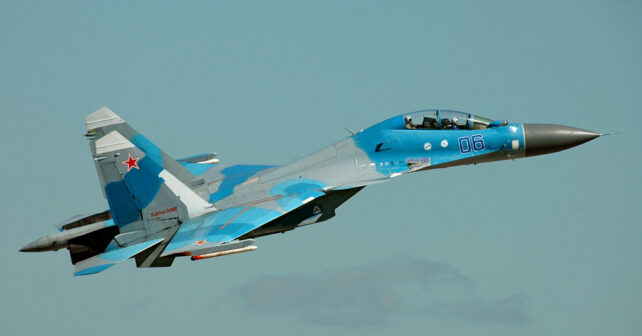
In the event of Russia’s aggression from Ukraine’s northern borders, the use of military aircraft will pose the greatest risk to Chornobyl. The following hypothetical conditions were accepted:
– strike on the Chornobyl nuclear power plant is carried out by aircraft;
– a volume-detonating air bomb is used;
– the energy release of the explosion is 1000 kg of trinitrotoluene (TNT).
We will consider the consequences of the impact of the air shock wave on the buildings and structures of the industrial site of the Chornobyl nuclear power plant. The main danger of a bomb blast near the Chornobyl nuclear power plant is that a significant part of the radioactivity is in the form of dust inside the Shelter Object – ie under the OC and under the NSC. Violation of the NSC integrity will lead to the release of highly active dust into the environment.
When the accident occurred, the fuel melted, radioactive lava flowed down, melting the building materials and including them. Now this lava has stopped for a long time, frozen and cooled, forming something like a deja solid (because it is molten sand), very heavy (because there is uranium and lead, as well as other heavy metals, and they are quite heavy) minerals. It is not easy to dig out this substance from there – our Institute has been trying for more than 30 years, and this is a quest.
Therefore, the main danger is radioactive dust and water that dissolved it. It should be understood that the reactor burned during the Chornobyl accident. The combustion temperature was very high, and radioactive substances were released into the air at a level above 10 km for several decades. If any bomb is dropped on the Chornobyl nuclear power plant, such a fire is simply impossible. There is nothing to burn. But the destruction of the NSC in the event of an explosion is highly likely. And can lead to the release of highly radioactive dust into the environment. In this case, you should expect to irradiate the personnel located on the territory of the Chornobyl NPP and the personnel of the exclusion zone located in the city of Chornobyl – that is, this radioactive dust will remain on the territory of the exclusion zone itself. Imagine that you are throwing a pile of pebbles into a pile of stones – and the dust flies up. Something like this could happen in the event of a Chornobyl explosion.
To be less afraid, you should turn to the numbers. According to expert estimates, radioactive substances with an activity of 40,000 to 120,000 Curie may enter the environment. This is hundreds of thousands of times less than was thrown away in the 1986 Chernobyl accident, when 50,000,000 Curies were thrown out. First, those who will be nearby will be irradiated in the open air within a radius of a few kilometers (and we are voting for such a scenario, because ours is no longer there). According to expert estimates, the radiation dose of Chornobyl personnel in the open air will be in the range of 1 – 2 Sv (this is a million times higher than the permissible levels of the population of Ukraine in the event of a radiation accident).
Note that irradiation of the human body in such doses for a short period of time (several hours) will lead to the manifestation of radiation syndrome. 1 Sv is considered the maximum dose capable of causing radiation sickness. This dose of radiation will lead to dysfunction of human tissues and organs (intestinal cramps, headache, apathy, nausea). 2 deaths should be expected per 1000 people irradiated with a dose of more than 1 SV. At a distance of 16 km from the Chornobyl nuclear power plant in the city of Chornobyl, people living and working there will receive about 100 mSv. These doses are relatively safe. In the body irradiated in such doses, there is no change in blood composition and other severe effects of radiation.
This is a very conservative estimate, so in reality, the dose is likely to be much lower. But the main danger for the population of Ukraine is that these radionuclides will begin to migrate through food chains and end up in the Pripyat River, and through it – in the Dnipro. The Kyiv Reservoir, which is used for drinking water supply by millions of Ukrainians, will be under threat of intense radioactive contamination. In order to prevent such a scenario, it will be necessary to build dams on the waterway, use filters – to invent those ways of water purification that have not yet been invented. Danger can occur if this radioactive water enters plants and thus contaminates agricultural land. That is why, if this happens, it is necessary to listen carefully to the advice of scientists and, before starting to grow crops in the areas along the Pripyat and the northern part of the Dnipro – check the soil for radioactivity in sanatoriums and specialized institutes.
The movement of radioactive substances on land through trophic chains plant-human, plant-animal-human, soil-plant-animal-human is so fast that even those radionuclides that “live” for a relatively short time can accumulate in the human body in significant quantities – that is why it is extremely important not to allow them to get inside the body. It is still unknown what is happening now with spent nuclear fuel storage facilities in the Chornobyl Exclusion Zone. There are two of them on the territory of the 10-km Chornobyl zone. We hope that all of the above will remain just a hypothetical scenario. Remember that this is just a scenario, a possible course of events with some set of assumptions. Why do you need to know this? To be ready.


No Responses to “The possible consequences of a missile strike on the Chornobyl nuclear power plant”