


In August tension between Russia and Ukraine over annexed Crimea escalated dramatically. Russia accused Ukraine of plotting “terrorism” in the peninsula captured by Moscow in March 2014. Russian leader Putin threatened to take unspecified counter-measures against Ukraine as a response to an “incursion of saboteurs”, claiming two Russian servicemen killed in the incident. He also suspended peace talks scheduled to take place on the sidelines of the G20 summit.
“In this situation, a Normandy format meeting would not make much sense right now”, Vladimir Putin threatened. The Normandy group that discusses the Minsk agreement implementation was supposed to meet at the upcoming G-20 meeting in China on September 4-5. Putin’s shocking statement that “Ukraine choses terror and tries to provoke a conflict with Moscow” was seen by many as Russia’s readiness to a new invasion.
And it was a statement of an authoritarian and imperialistic leader who invaded and illegally annexed Crimea two and a half years ago. Putin accused Ukraine of “terrorism” while Moscow has been sending troops and weapons to back its rebel “proxies” in Donbas war against Ukraine.
Ukrainian government says that these accusations were manufactured by Moscow in order to create a pretext for full-scale military invasion and to justify peace talks’ cancelation. Ukraine government declared that the army is on high alert, manufactured or not, Moscow’s accusations led to a serious escalation.
The United States and European Union say there is no evidence that a Ukrainian incursion into Crimea took place. International OSCE observers in Ukraine could not confirm such incident neither. While the reality of the plot is not proven Moscow is increasing its military activity in Crimea, deploying missiles in the peninsula and conducting military exercises.
A new escalation erupted when the Russian Federal Security Service (FSB) announced on August 10 that it had prevented attempts by Ukrainian saboteurs to enter Crimea and commit terror attacks at “critically important infrastructure facilities on the peninsula”. The FSB also said it had eliminated the Ukrainian Main Intelligence Directorate’s network in Crimea and detained several suspects.
Russian Prime Minister Dmitry Medvedev said Moscow could break off diplomatic ties with Ukraine in light of the alleged incident in the annexed Crimea. “If there is no other way to change the situation, the president Putin could take this step”, state media quoted him as saying.
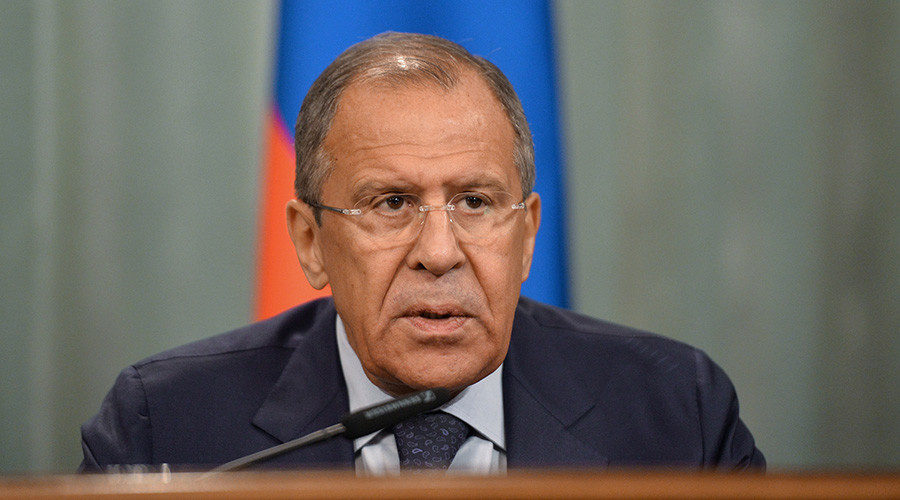 However, Russian Foreign Minister Sergey Lavrov said that “no one” is interested in severing diplomatic relations between Russia and Ukraine. “I don’t think we are in a situation where somebody is interested in severing diplomatic relations. It would be an extreme measure. It is essential not to succumb to emotions and not opt for some extreme actions, but to display reserve and concentration to achieve stabilization”, Lavrov said at a joint press conference with German Foreign Minister Frank-Walter Steinmeier in Yekaterinburg.
In turn, Ukrainian President Petro Poroshenko stated that Moscow’s allegations against Ukraine are groundless and cynical. He told French President Francois Hollande and German Chancellor Angela Merkel that the Kremlin’s accusations against Ukraine aim at discrediting the country in the international partners’ eyes.
Still, Poroshenko believes that the Moscow’s provocation has caused a considerable aggravation of security in the region. “Of particular concern is the fact that Russia has used a provocation as a pretext for torpedoing of talks in the Normandy format and the implementation of the Minsk agreements”, the press service quoted Ukraine’s president as saying.
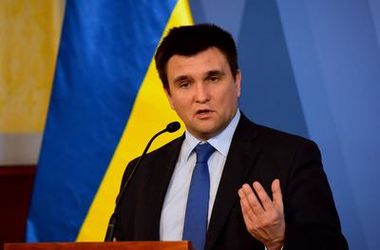 Ukrainian foreign minister Pavlo Klimkin in an interview with Austrian Der Standard stressed that Moscow is seeking for a pretext for an attack on Ukraine. “Russia accuses us of opening fire at the administrative border with the occupied Crimea. But how could the use of artillery systems remain unnoticed by a satellite and local residents? On the other hand, the Russian troops deployed nowadays in the occupied Crimea could launch a provocation at any time, which could be used as a pretext for an attack on Ukraine”, he said.
The EU and the US called on “all sides” to avoid escalations. The European leaders assured Ukraine of assistance in de-escalation and expressed readiness to jointly work to improve the situation. The parties reaffirmed commitment to joint efforts to resolve the conflict in war-torn Donbas and annexed Crimea only through political and diplomatic means and stressed the need for a consistent continuation of cooperation in the Normandy format.
US defence officials told Russia to tone down its tough talk on Ukraine and said that Russia should do more to prevent further escalation. Washington warns that Moscow could inflame an already tense and fragile situation. “We are extremely concerned. Russia is continuing this pattern of provocative rhetoric which has obviously created an impression in a lot of minds that there is something significant going on there,” Pentagon Deputy Press Secretary Gordon Trowbridge said. He added the US has not seen any evidence to support Russian claims that Ukraine has been trying to carry out terror attacks and reminded Moscow’s record of “frequently levying false accusations at Ukraine”.
As claimed evidence, in the following days Russia revealed identities of three detained “saboteurs”. First of them, Ukrainian citizen Yevhen Panov, resident of Zaporizhia region’s town of Enerhodar, was interrogated. In an edited video posted by Russian state media, Panov is shown injured, he’s confessing to plotting sabotage in Crimea, and naming several co-conspirators, all allegedly with ties to the Ukrainian army.
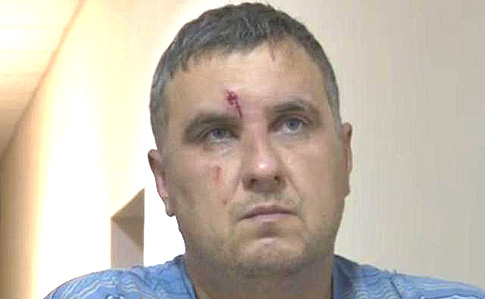 Yevhen Panov had served in Ukrainian army and had fought in Donbas war for one year. During last time he has been working as a driver in Zaporizhzhia region. The video of his interrogation suggests that he was badly beaten and threatened. The answers have been edited and different pieces of different interrogations put together. Panov appears in his summer t-shirt and rubber flip flops, a wear anyone doesn’t use when goes on special and secret military operation.
According to Panov’s brother Igor, who spoke to Ukrainian media, Panov, a native of Energodar, some 200 km of Crimea, said that he had no ties with the peninsula. His family believes that he was abducted by Russia’s FSB security agency. “I’m afraid that Yevhen was kidnapped and brought to Crimea because they want to identify him as the organizer of some unbelievable conspiracy,” Igor told journalists.
The second suspect in the alleged “plot” named by Russia was Andrei Zakhtei, a construction worker from Yevpatoria. A native of Western Ukraine had been convicted twice for crimes there in 1998 and 2008. He was known for his ties with criminal gangs, according to Ukrainian police. He moved to Russia and later to Yevpatoriya. Over the last three years Zakhtei was also known for anti-Ukrainian posts in social media.
The third alleged “saboteur” questioned and shown by pro-Kremlin media was Redvan Suleimanov, an alleged resident of Zaporizhzhia, a Crimean Tatar. On an edited video Suleimanov confesses plans to carry out terror attacks planned by Ukrainian intelligence.
However, there are some details that question the truthfulness of this interview and Moscow’s allegations. Home address in Zaporizhzhia that he names, vul.Kosmichna 168, does not exist. A Ukrainian blogger pointed out that the video with the “confession” aired by Russian TV shows footage of alleged August 7-8 Crimea phenomena of full moon, which was in fact on July 19. Crimean Tatar Mejlis leader Refat Chubarov stated that Suleimanov was probably arrested three weeks before the alleged incident and was a resident of a village near Simferopol.
Russian news agency Interfax published a photo of an alleged tent where the so called sabotage group had spent the night after “infiltrating” the peninsula. However, later it was confirmed the picture of the tent was taken from Fotolia service and had nothing to do with “terror”.
Having all this information, Ukrainians don’t believe in Russian “plots accusations” and think that Putin is planning a new invasion. And this fear is not groundless. On August 12 Moscow has announced deployment of S-400 air-missile system, most advanced in Russian arsenal, to Crimea. Russia has built up troops on Ukrainian border and resumed the hostile rhetoric.
Moscow has stationed in different locations along Ukrainian border as many as 40,000 troops, including tanks, armoured vehicles, and air force units. Large numbers of Russian troops are also involved in military exercises.
Russia has deployed additional military forces and systems to Ukraine’s northern, eastern, and southern borders. Russian military activity around Ukraine has increased since May when Defence Minister Sergei Shoigu announced the creation of three new divisions in the Western and Southern Military Districts.
 Lithuania’s foreign minister, Linas Linkevicius, claims that the current tactics used by Russia, fabricating an attack in order to respond to it, are the same as those of the Soviet secret police, the KGB. “Aggressor accused the victim of an attack. Old KGB methods. False Russia’s accusations twd Ukraine to justify future ‘retaliation’?”, he wrote on Twitter.
The German newspaper Die Welt called the Crimean incident a planned provocation: “It all looks as if Putin, using obvious propaganda, a provocation clearly fabricated by the Russian Special Forces, and barefaced threats is preparing new military aggression or even a full-scale invasion of Ukraine”.
Observers feared that Russia’s President Vladimir Putin would start a small regional war this August. In was exactly in August that Russia invaded Ukrainian Donbas to defeat Ukrainian forces in Illovaisk in 2014 at the beginning of the war. In August 1999 we saw Russia’s second war in Chechnya which preceded Putin’s rise to power. In August 2008, Russia invaded Georgia in the conflict over South Ossetia. Moreover, Russia has parliamentary elections on September 18, and although it’s predictable that Putin’s parties are going to win, he could to mobilize Russian people around a “small and victorious war” or against an external enemy.
The reason for this escalation on internal arena could be to motivate voters in Crimea to back “security” and “the ruling party” in September elections. Putin needs victories to secure success for his United Russia party, Russian opposition PARNAS party leader Mikhail Kasyanov said in an interview with Radio Poland. “He needs a kind of legitimacy outside Russia in order to stay in power. It means he needs to find an external enemy. And he has actually found and voiced it. The United States, the Baltics, Poland, and Ukraine – these are the directions the Kremlin propaganda is now targeting at. Putin needs victories. Unfortunately, Ukraine is now the ground for such activity”, he stressed.
A range of experts say Putin is more likely raising stakes by flexing muscles and seeking concessions from the West on the diplomacy field. The main goal should be to get Western sanctions lifted by increasing pressure on the EU. European leaders say the sanctions cannot be lifted unless the Minsk peace agreement over eastern Ukraine war is implemented. While Russia and its proxies in Donbas fail to fulfil the truce terms, Moscow may be trying to make Ukraine alone responsible for the fail.
Under the deal, Ukraine is committed to grant Donbas region special status, to pardon rebel fighters (foreign (Russians) not included here), and to organize elections. But Kyiv says it’s impossible to do as Russia is not meeting its own obligations, failing to give back control of Ukraine’s eastern border and continuing to supply its proxies in Donbas.
In the meantime, there has been an upsurge in violence in Donbas, with an increase in casualties, around 30 Ukrainian soldiers were killed in July. It’s the largest monthly death toll since the latest ceasefire was agreed in February 2015.
The fact the Minsk truce is not working have also pushed Russia towards escalation. The tactics of Ukraine and the West were to force Moscow to stop military aggression through economic sanctions. But so far these tactics failed as there is no peace and the fighting in Donbas is mounting.
A biggest goal of Putin is to not let Ukraine be successful after Maidan in order not to have a similar uprising in Russia. New escalation has come weeks before the 25th anniversary of Ukraine’s independence from the Soviet Union, and obviously from Moscow, which is on August 24. Moreover, a risk of a new invasion has come when Ukraine’s economy has shown signs of recovery: GDP growth this year is estimated of around 1 per cent, inflation has dropped from 60% to around 6%, national currency has stabilized, budget deficit being reduced. But now Ukraine’s macroeconomic data could be shaken by the latest escalation with Russia. And it’s easy to see that Kremlin’s intention may be just to destabilize Ukraine again.
To destabilize Ukraine, pursuing that aim Moscow needs to keep the conflict “warm”, as it doesn’t have enough resources to launch a “hot” one, dealing at the same time with Syria war and other issues. And as far as Ukraine-Russia conflict is not resolved Moscow will remain an important player in international peace talks, Putin’s big ambition.
At the same time, by flexing its war muscles, Moscow is playing a dangerous game on international level. Russia is sending a signal to the West, threatening by a greater escalation in the region. Claiming there is no advance in the current peace process and raising stakes, Putin wants an advantage for him right now.
Similar version was highlighted by Alexander Baunov, a senior associate at the Moscow Carnegie Center. “For now, Russia’s leadership is using the story about Crimean saboteurs as an ultimatum to its Western partners in the negotiations on Ukraine”, he wrote.
It means that Moscow shows the readiness to resolve the conflict with military means blaming poor advance in a peaceful settlement. Ultimately, Russia wants the West to forgive its annexation of Crimea and to freeze the armed conflict in eastern Ukraine, leaving Russia-controlled Donbas inside Ukraine, which could be fatal for Kyiv.
It seems that Moscow doesn’t seek a clear win in Ukraine but only tries to intimidate the West and to achieve concessions. Putin thinks that intimidation tactics would work. It’s his style to escalate military tensions before the talks as he did in the battle for Debaltseve during Minsk talks in February 2015, which led to a capturing a strategic Ukrainian town already after signing the deal. Intimidation together with state propaganda machine, “proxies” in other countries are parts of a powerful “hybrid warfare”.
New escalation is not surprising, since Russia has failed to fulfil its obligations under the Minsk agreements and apparently has no intention to do it. And the only way which remains for Moscow is to shift a full responsibility on Ukraine. In its logic the Kremlin always claims that it’s competing with the West in Ukraine, saying that it’s not Russia-Ukraine conflict and it’s fighting the US, not Ukraine. Anti-Americanism ideology has become a pillar for Putin regime. At the same time pro-Russian parties and groups in the EU countries, like French National Front, spread these ideas in Europe.
So, Moscow has sent the signal to Brussels, Paris and Berlin, but also to Washington. Putin said that the Normandy format talks, driven by Germany and France, are giving no results. By this he makes another effort to reengage the US in the issue, as it was in Sukrov-Nuland talks.
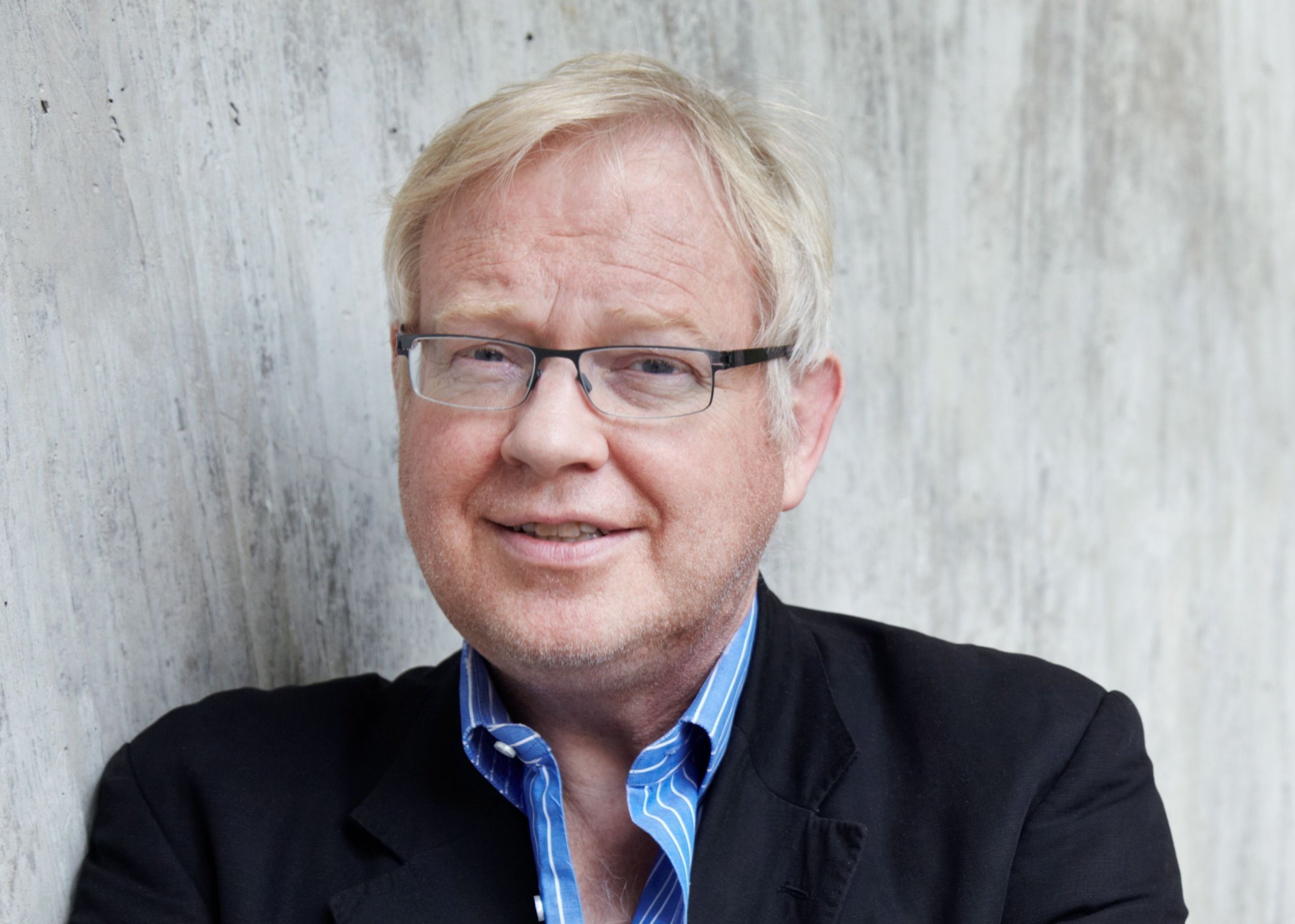 As Roger Boyes wrote in his article for The Times, Putin is hoping to strike a deal with the US in last months of Obama’s presidency. And this could an exchange: Washington steps back from Ukraine and Moscow restrains its courtship with Turkey. “Moscow is calculating that the United States cares more about keeping Turkey firmly inside NATO than it does about maintaining a stand-off over the illegal annexation of Crimea”, he wrote.
In his actions Putin is guided by his imperial ambition and lust for power, not only in Russia but also in the regions he thinks his “spheres of influence”. Even if Russian economy and people are suffering of outcomes of these escalations, Putin’s backing among Russian voters remains strong as the Kremlin propaganda brainwashing machine is promoting a nationalistic and expansionist agenda and has created a Stalin-like cult of personality while portraying Putin as an “omnipotent czar” against whom there is a world conspiracy.
Now we’re expecting what happens next over Crimea crisis. There are many scenarios. But what is sure, there is going to be tough negotiations and games of nerves between Russia and the West, where Ukraine is taken a hostage by the Kremlin.
An all-out war would mean for Russia huge losses, as Ukraine’s army is much stronger than before and the country is prepared to such scenario, and it would also mean more and severe sanctions against Moscow without major achievements. Although some Kremlin nationalist propagandists are suggesting a need for a war on Ukraine. By discrediting Ukraine, flexing its military muscles and bargaining with the West in several geo-political issues Moscow wants to keep Ukraine in its sphere of influence. Crimea and Donbas are just means for achieving its goal. What happens next depends much on the EU leaders’ reactions. It may also determine Putin’s further steps and tactics. A strong reaction of a consolidated Europe may force Moscow to step back while a lack of unity and firmness may let Putin do a next dangerous step.
Author: Michael
 (CC BY) Information specially prepared for InformNapalm.org site, an active link to the authors and our project is obligatory for any reprint or further use of the material.


No Responses to “Russia’s Escalation of Conflict with Ukraine Over Crimea: Pretext for Invasion or Raising Stakes?”