

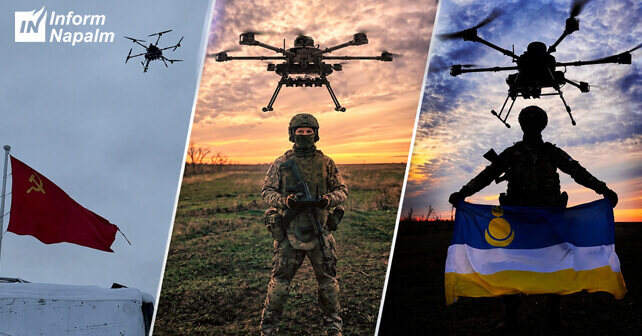
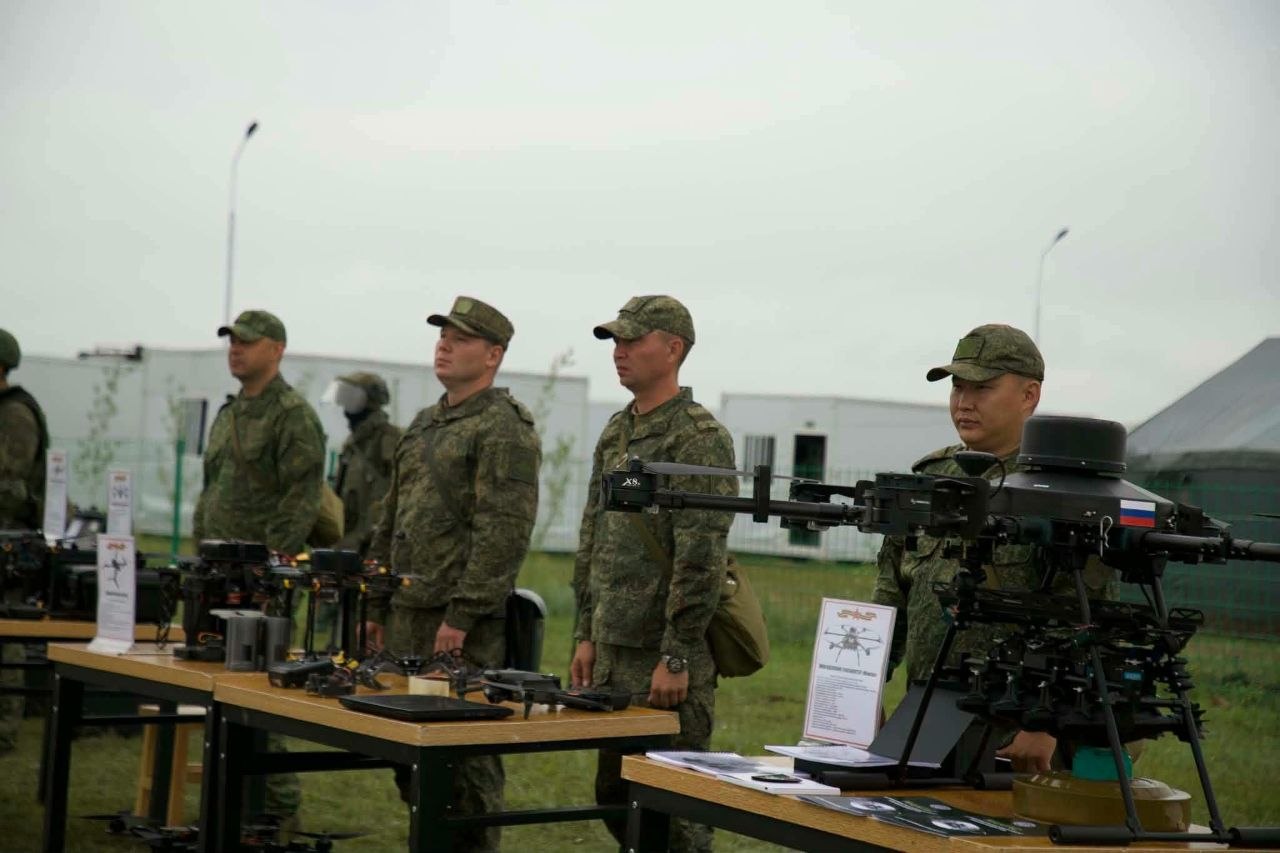
On September 18, 2026, the Russian Defense Ministry showed the combat use of a “new drone” — the Mangas heavy hexacopter — by servicemen of the 11th Army Corps of the Sever Group of Forces. InformNapalm volunteer intelligence community noted that this was the first public mention of Mangas by the Russian MoD. However, an in-depth OSINT analysis found that by the time the “new drone” appeared on the Russian Defense Ministry’s official channel, its public history in Russian Z-channels already stretched back about a year — and led us to a number of notable findings. Read more in this InformNapalm OSINT investigation.
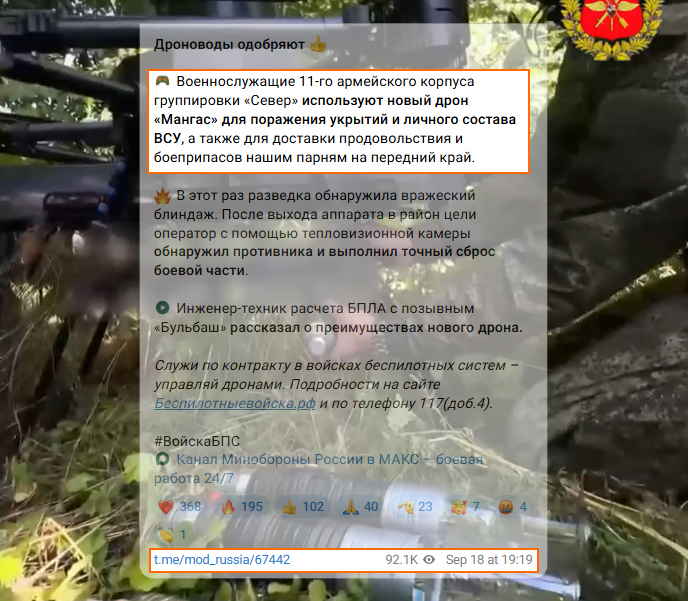
Still from a video about the combat use of the Mangas, published by the Russian Ministry of Defense on September 18, 2026. [archive]
InformNapalm traced the history of Mangas from the launch of production in Buryatia to a Moscow company owned by Chingis Dambiev, his patent, and links to the developers of the Kurier unmanned ground vehicle (UGV).
Russia’s contender for the Baba Yaga role
The class of heavy Ukrainian multicopters, which Russian forces commonly refer to by the generic nickname “Baba Yaga,” have become a distinct battlefield problem for Russia over the course of the war. Russian military commentators have repeatedly criticized Russia’s lag in this class of UAVs and the absence of a mass-produced counterpart to Ukraine’s Vampire.
The Mangas is positioned precisely in this niche: it is a multi-purpose heavy-duty hexacopter designed for strike and logistics missions. Even before it appeared in the Ministry of Defense’s materials, Russian Z-channels included it in the list of “Baba Yaga analogues.”
The name “Mangas” also alludes to Buryat-Mongolian mythology where mangas is a demonic monster, the hero’s adversary in epic poetry. Russian publications often simplify the meaning as an “evil spirit” or “demon.”
In early 2026, Chingis Dambiev claimed that Mangas drones had already carried out more than 500 combat sorties for strike and logistics missions. The figure could not be independently confirmed.
For comparison, Ukrainian Vampire had already logged more than 2.5 million sorties by then. Against that background, Dambiev’s claimed 500 Mangas sorties suggest that the platform was still at an early stage of combat use.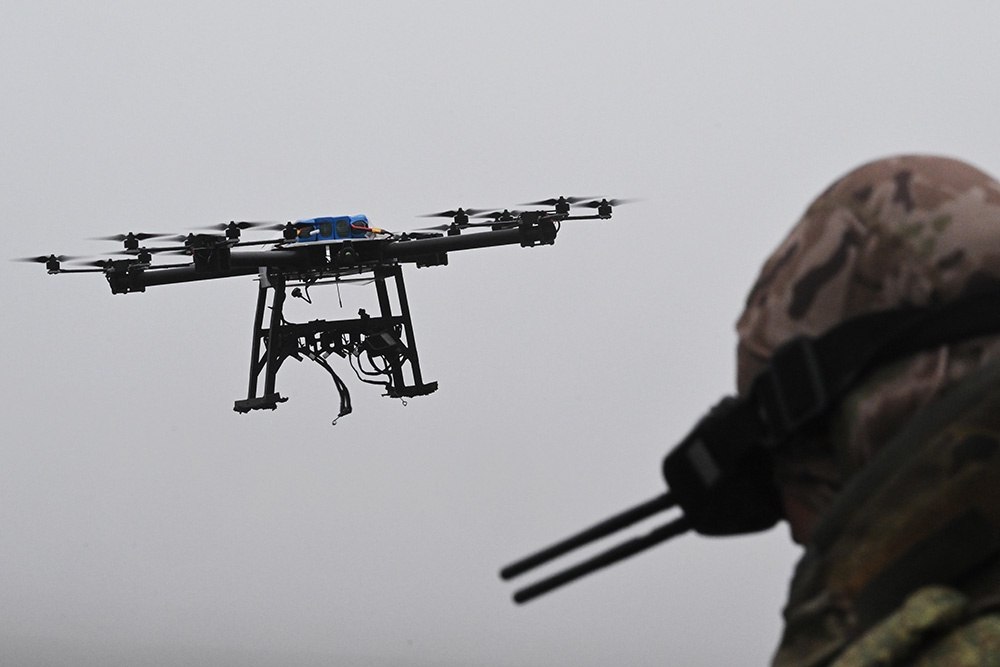
Mangas hexacopter. Photo by: Boris Rozhin’s Telegram channel (Colonelcassad).
The Russian Defense Ministry’s demonstration of Mangas may indicate that the platform has become one of Russia’s more visible attempts to fill a long-acknowledged capability gap. At the same time, there is no open-source evidence that it has been adopted or fielded on a mass scale.
From Buryatia to combat use
The earliest public reference to Mangas identified by InformNapalm dates to September 2025. Reports at the time stated that the Baikal Tactical Group, together with the developers of the Kurier UGV, was launching production of heavy hexacopters in Buryatia for Russia’s Vostok Group of Forces. The project was promoted by Telegram channels associated with Z-bloggers Boris Rozhin and Chingis Dambiev.
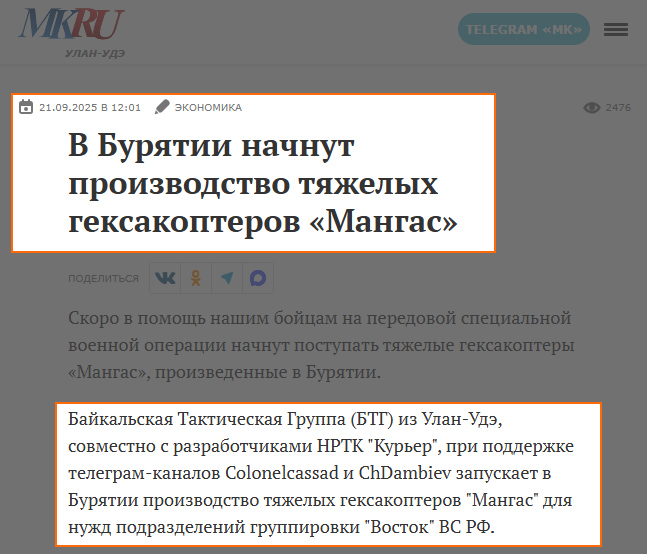
The earliest media mention of Mangas identified by InformNapalm, dated September 21, 2025. The publication already linked the project to the developers of the Kurier UGV. [archive]
Soon afterward, open sources showed several airframes, a payload-release system, and test flights carrying a mock-up of a TM-62 anti-tank mine.
The development effort may have begun earlier. On May 29, 2025, Russian Deputy Prime Minister Yuri Trutnev said that “large heavy reconnaissance drones were being further developed in Buryatia.” Four months later, the launch of Mangas production was announced. [archive]
Chingis Dambiev: from Z-blogger to UAV manufacturer
On January 22, 2026, MANGAS LLC was registered in Moscow (INN 9727124693, OGRN 1267700013294). Its sole founder and CEO was Chingis Tsirenovich Dambiev [Rus.: Чингис Циренович Дамбиев], and its principal registered activity was the manufacture of unmanned aircraft systems.
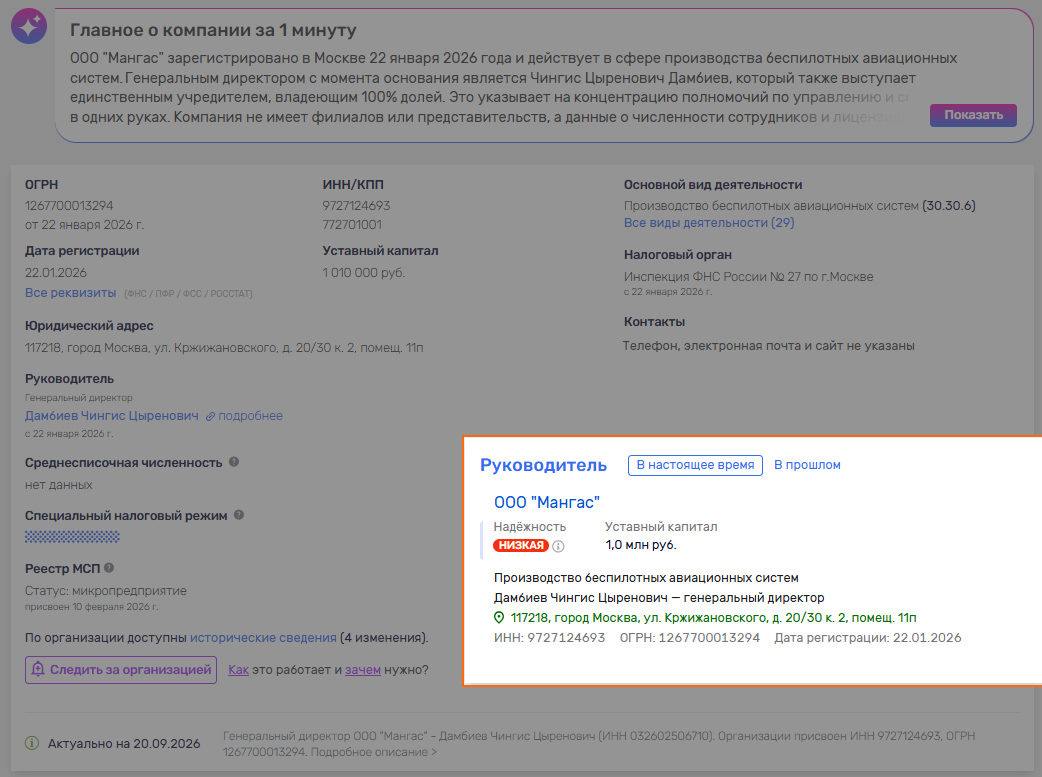
Data from Russian corporate registries on MANGAS LLC: Chingis Dambiev is listed as the CEO and sole owner of the company. [archive]
The company appeared only after the drone itself had already entered the public record.
There is another notable detail. At registration, MANGAS LLC had charter a capital of 10,000 rubles. More recently corporate registry aggregators list 1,010,000 rubles — an increase of exactly 1 million rubles.
Open data does not currently establish when the increase occurred, where the funds came from, or its economic purpose. The increase itself therefore should not be treated as evidence of state financing.
Two days after the company’s creation, on January 24, Dambiev filed a patent application RU2026101839U. On March 24, it was registered as utility model RU242404U1, “Hexacopter with a Universal Battery Placement System.” Dambiev is listed as both the inventor and the original intellectual property rights holder. [archive]
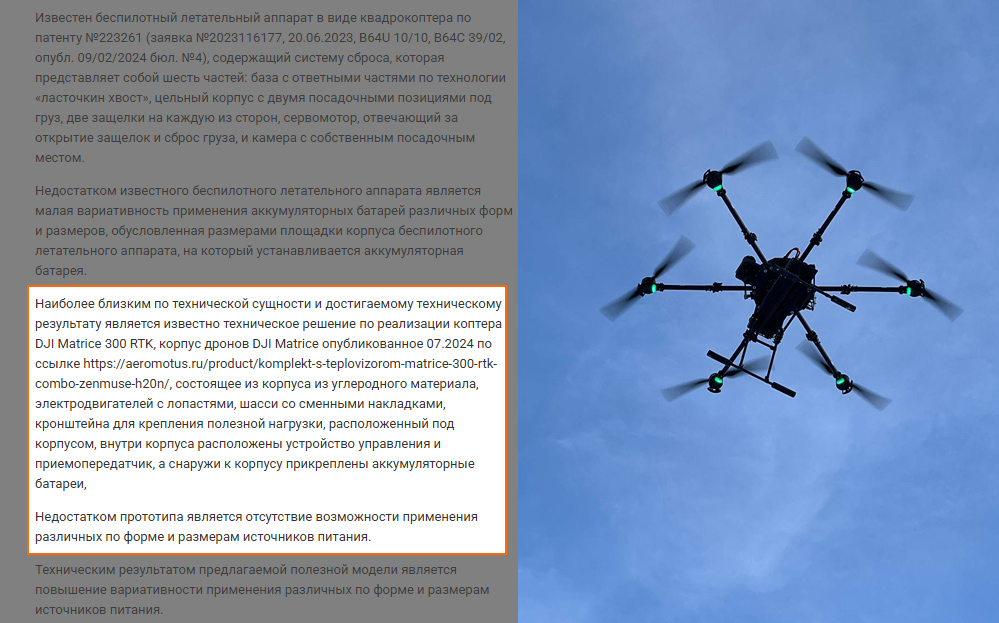
Collage: left — an excerpt from the description of utility model RU242404U1; right — the Mangas hexacopter in flight.
The patent describes a six-rotor electric multicopter equipped with a payload-release system, but the utility model itself primarily covers a universal platform for batteries of different sizes. The document identifies the DJI Matrice 300 RTK as the closest analogue. It does not disclose the origin of the motors, controllers, autopilot, or other electronics.
Mangas and the developers of Kurier
Corporate registries add another detail.
MANGAS LLC is registered in Moscow, at 20/30 Krzhizhanovskogo Street, Building 2, Premises 11P. In the same building, but in Premises 5P, NRTK KAPS LLC is registered. Its CEO and 100% owner is Zorikto Gombozhapov [Rus.: Зорикто Гомбожапов].
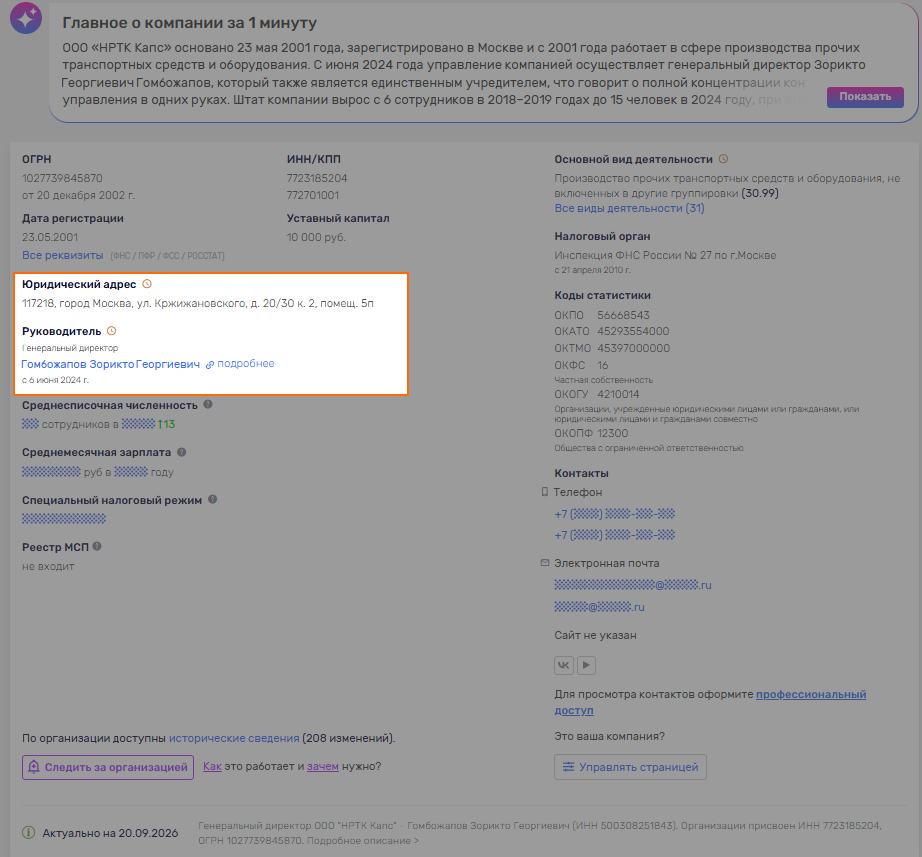
Registry data of NRTK KAPS LLC: Zorikto Gombozhapov is listed as the company’s CEO and sole owner. [archive]
A shared building address, by itself, does not prove joint production. However, the coincidence complements a relationship already established through open sources: Mangas production was launched in cooperation with the Kurier developers, while the @stormdron channel now presents itself as the channel of the developers behind both systems. [archive]
Taken together, open sources allow the following chain to be traced:
Kurier developers — launch of Mangas production in Buryatia — Dambiev — MANGAS LLC — Dambiev’s patent — Russian Defense Ministry demonstration.
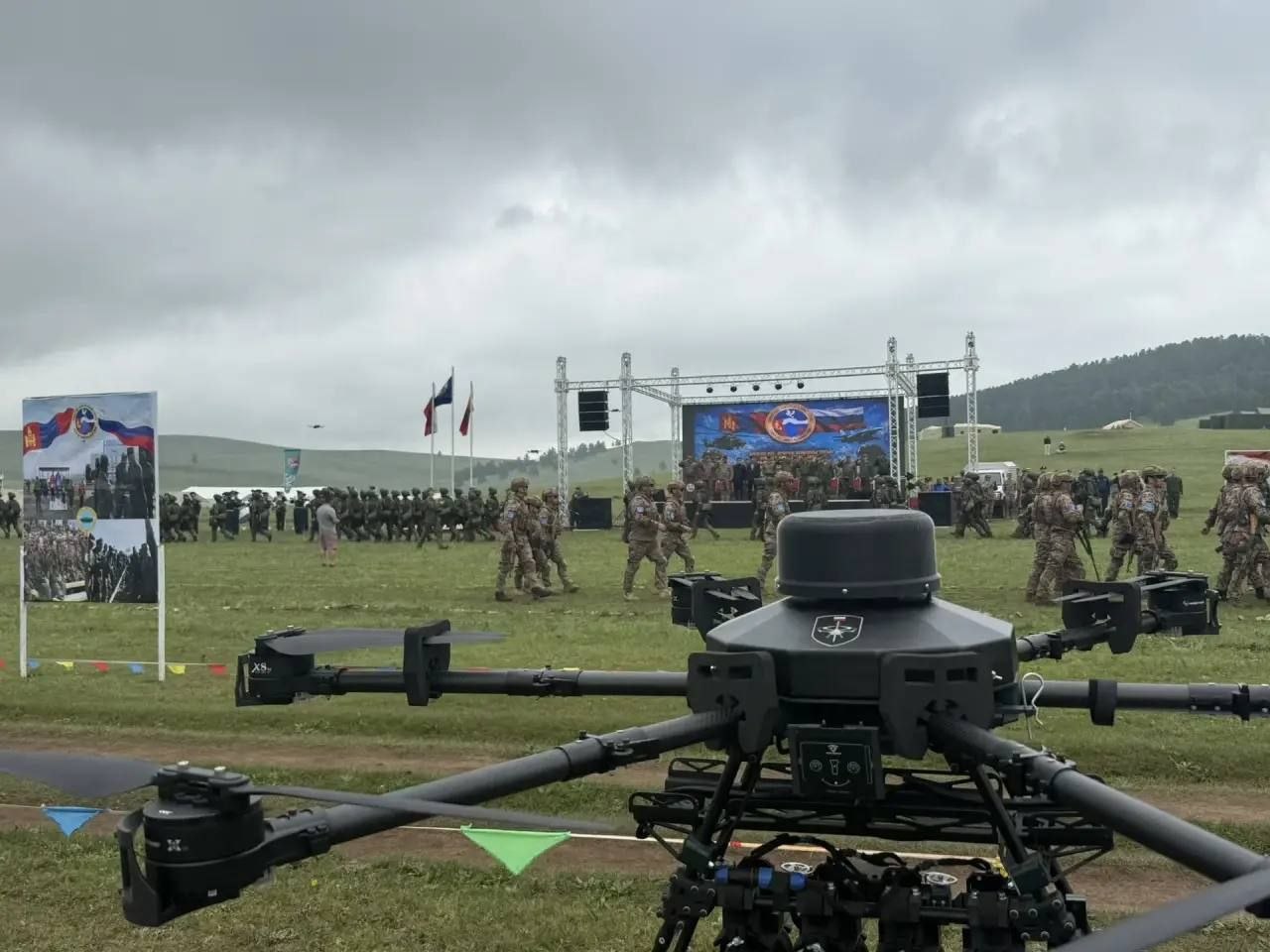
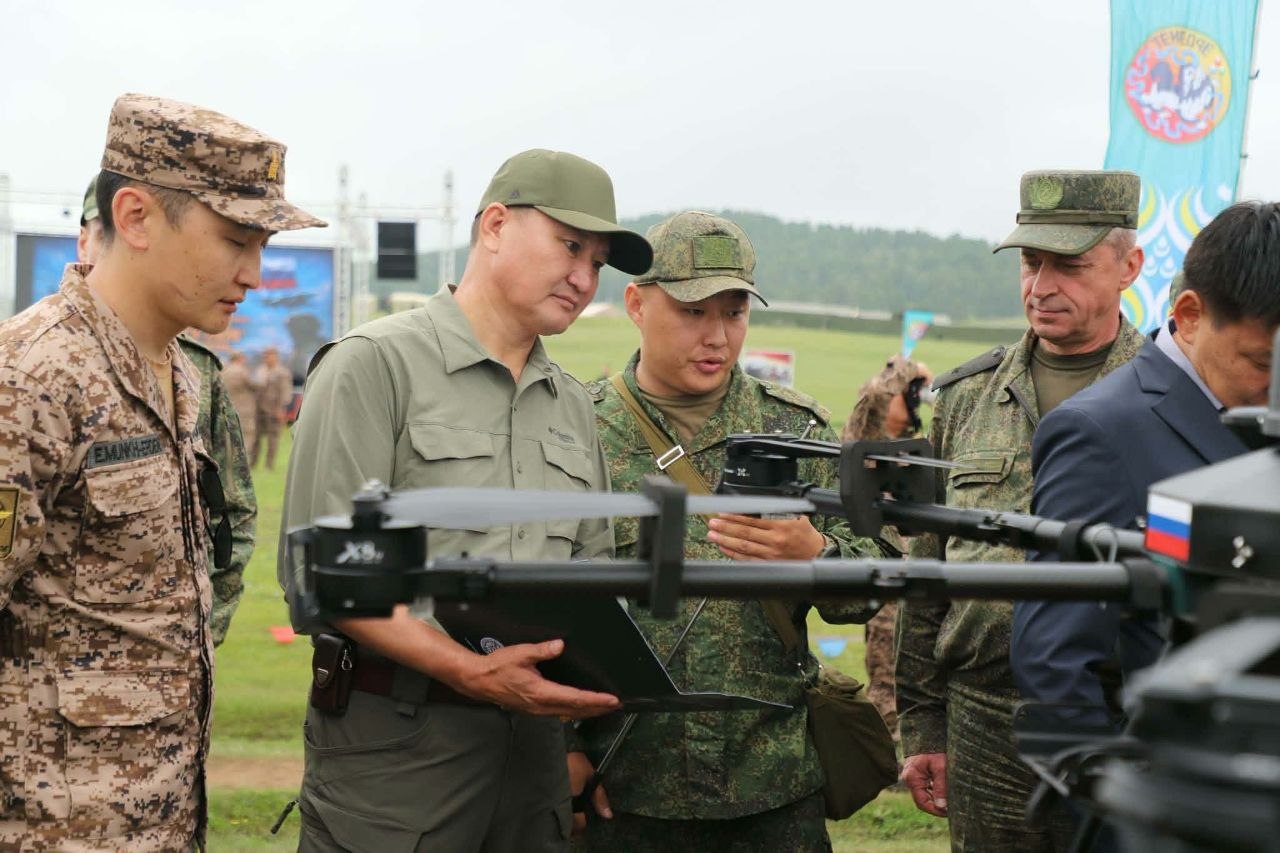
Mangas hexacopter during the joint Russian-Mongolian Selenga-2026 exercise in Orkhon Province, Mongolia, August 2026. Photo by: Telegram channel of the Mangas developers.
Next up: the Chinese trail
The component base of Mangas remains an open question. InformNapalm has not yet identified a Chinese model that can be substantiated as its direct basic prototype.
NRTK KAPS, however, has left a much more detailed documentary trail. Dozens of declarations make it possible to trace imports of Chinese electronics and reconstruct part of the component base of the Kurier UGV — an earlier product from the same ecosystem.
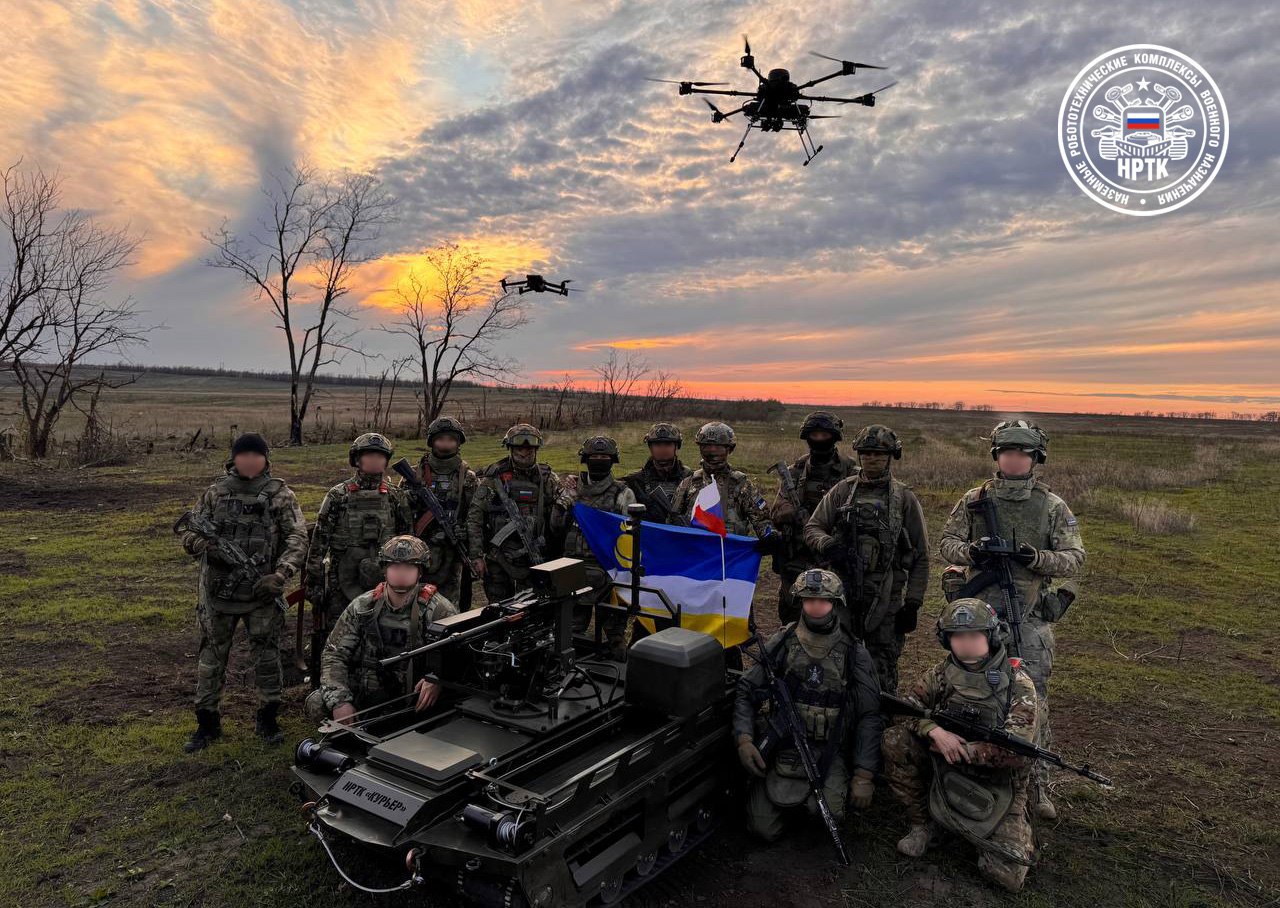
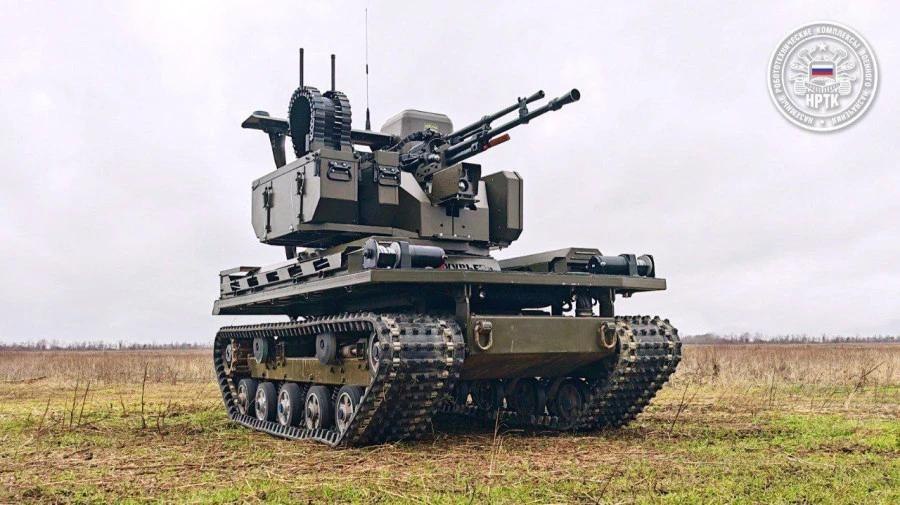
Kurier unmanned ground vehicle. Photo by: official Telegram channel of the developers of the Kurier UGV and Mangas.
In the second part of the investigation, InformNapalm will examine the paper trail behind the Kurier UGV: from Zorikto Gombozhapov and NRTK KAPS to Chinese suppliers and the original equipment manufacturers (OEMs) of components that we were able to identify.
Read more related material from InformNapalm
- Walking the Path of Fire: Twelve Years of InformNapalm’s War Against the Kremlin
- Ukrainian hackers uncover how Russian drone operators are using Belarus
- OKBMLeaks: classified documents from a Russian components manufacturer for Su-57 fighter and PAK DA Poslannik next-gen bomber
- CYBINT operation against the Gonets satellite system, dubbed “Russia’s equivalent of Starlink”
- Wildberries caught in the crossfire of drone strikes and cyber operations
- Ten years later: from OSINT detection to target destruction. Ukrainian Navy hits Russian Bastion missile system in temporarily occupied Crimea
- Hacktivists uncovered new classified documents from STC, Russian manufacturer of Orlan-10 drones
- CYBINT. Hacking Russian UAV manufacturer. Part 1: who assembles Geran-2?
- AlabugaLeaks. Part 2: Kaspersky Lab and neural networks for Russian military drones
- AlabugaLeaks. Part 3: Albatross, war, NVIDIA, Sony and Saito
- The Russian drone threat 2026–2027: Ukraine’s lessons for NATO
- Russian generals’ funeral march 2.0: confirmed casualties in the war against Ukraine
 This publication was prepared by Andriy Lisitsyn and Roman Burko especially for readers of InformNapalm volunteer intelligence community. Distribution and reprint with reference to the source is welcome! (Creative Commons — Attribution 4.0 International — CC BY 4.0). Subscribe to InformNapalm social media pages.
 InformNapalm does not receive any financial support from any country’s government or large donors. Only community volunteers and our readers help us to maintain the site. You can also become one of the community volunteers or support InformNapalm with your donations.


No Responses to “Russian Ministry of Defense unveils Mangas heavy hexacopter. OSINT: who is behind Russia’s “new drone”?”