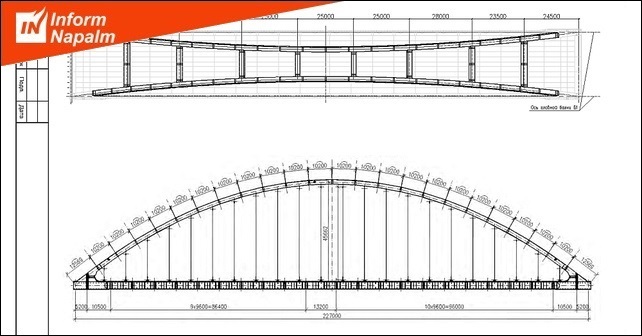
Ukrainian missiles and drones have destroyed the central road arch of the Kerch Bridge and the road span beneath it. The railway section was also damaged in the attack on 17 November 2026. According to the Security Service of Ukraine (SBU), the attack was preceded by a month-long operation conducted in seven stages, during which Ukrainian forces initially targeted Russian air defences. The bridge, which Russia built following its illegal annexation of Crimea, has long been scrutinised by Ukrainian intelligence. As early as 2022, Ukraine’s military intelligence service obtained extensive Russian technical documentation relating to the bridge.
Images and video footage released by Ukrainian President Volodymyr Zelenskyy show a collapsed steel arch in the Kerch Strait and a substantial gap in the road link. Ukraine’s General Staff reports that road traffic has been completely halted and that the railway arch has been damaged. The Russian occupation authorities have suspended road traffic, while some rail services have reportedly resumed, according to Russian sources. The extent of the damage to the railway and its remaining transport capacity are still unclear.
A month-long operation against Russian defences
According to the SBU’s account of the attack, the operation lasted approximately one month and comprised seven stages. During the first few weeks, the SBU and other Ukrainian units systematically targeted Russian air defences around the bridge. Subsequent attacks targeted the bridge itself, initially by the security service and later in cooperation with other elements of Ukraine’s defence forces.
President Volodymyr Zelenskyy reports that Ukrainian forces also targeted Russian radar stations and electronic warfare systems. Over several years, Russia has established extensive defences around the bridge, which is one of the most heavily guarded infrastructure facilities on the occupied peninsula.
In the final stage of the operation, the SBU’s Alfa special forces unit targeted the road arch with Ukrainian-developed Palianytsia missile drones. The security service reports that the arch and the road span beneath it collapsed following the strikes. According to Zelenskyy, the railway section was attacked using R-360 Neptune cruise missiles, as well as the Ruta and FP-5 Flamingo weapons systems.
The SBU reports that a total of eleven Ukrainian-developed weapons systems were used during the operation. In addition to Palianytsia, Neptune, Ruta and Flamingo, these included Dovbush, Vendetta, Da Vinci, Sichen, Mich-2000, An-197 and FP-1. The agency has not disclosed which targets the individual weapons systems were used against during the earlier stages.
Ukraine’s Unmanned Systems Forces also participated. According to the General Staff, the operation involved operators from the 1st Separate Unmanned Systems Centre and the 7th Long-Range Strike Centre of the 414th Separate Brigade, known as Magyar’s Birds. The units struck selected targets, saturated Russian air defences and were responsible for communications ahead of the final missile strike.
The road arch has collapsed into the Kerch Strait
The road arch of the Kerch Bridge had already been damaged in a Ukrainian attack on 16 November. According to the Ukrainian monitoring channel Krymskyi Veter, the arch had become deformed and the road deck had partially subsided and twisted out of alignment. The Russian authorities initially suspended traffic but resumed it later that evening, allowing vehicles to travel alternately in both directions. Further explosions followed during the night of 16–17 November, after which the road arch and the road span beneath it collapsed into the Kerch Strait. Ukraine’s General Staff confirms that the road link could no longer be used by vehicles.
The railway section, however, remains standing. The SBU has reported preliminary indications of damage, and the General Staff states that the railway arch was struck. Meanwhile, Russian railway operators have announced that some train services have resumed. The railway’s remaining transport capacity following the attack is still unclear.
The collapsed road arch has reportedly blocked the Kerch–Yenikale Canal, the dredged deep-water navigation channel between the Black Sea and the Sea of Azov. The channel is approximately 120 metres wide and passes beneath the bridge’s central arches. As the remaining parts of the Kerch Strait are too shallow for larger vessels, the collapsed steel structures are preventing their passage. Reopening the navigation channel will require the removal of the wreckage, an extensive salvage operation that may involve cutting sections of the structure underwater.
According to the Russian-appointed occupation leader Sergei Aksyonov, two people were killed in a drone attack in Crimea’s Leninsky district, near Kerch. Russia’s Investigative Committee has confirmed that the attacks on 16 and 17 November caused structural damage to the bridge but has not specified the extent of the damage. Kremlin spokesperson Dmitry Peskov has announced that the bridge will be restored, but no reliable timetable for rebuilding the road arch has been made public.
Russian engineering documents in the possession of Ukrainian intelligence
On 16 June 2022, Ukraine’s military intelligence service (HUR) announced that it had obtained detailed Russian technical documentation concerning the transport link across the Kerch Strait. According to HUR, the documents contain information on terrain conditions, road surfacing, bridge supports, landslide protection structures and access and exit ramps. InformNapalm also has access to Russian documentation on the operation and maintenance of the Kerch Bridge’s road link.
When HUR released the material in 2022, the intelligence service questioned Russian assurances that the bridge was fully protected. At the time, the Kremlin maintained that the Russian military had the situation under control, even though technical documentation concerning the bridge had already fallen into Ukrainian hands. According to InformNapalm, Ukrainian experts have long been familiar with the bridge’s design and potential weaknesses. No information has been made public as to whether the documents were used in planning the attack on 17 November.
InformNapalm’s earlier revelations about ground movement near the bridge
As early as 30 January 2019, InformNapalm published internal Russian government documents and photographs revealing ground movement along one of the Kerch Bridge’s access roads. The material originated from the transport administration of the occupation authorities in Crimea and had been passed to InformNapalm by hacktivists from the Ukrainian Cyber Alliance. The documents showed that the ground had begun to slip along a section of road leading to the bridge. According to the documents, the problems had arisen as a result of work carried out by the Russian contractor Stroygazmontazh.
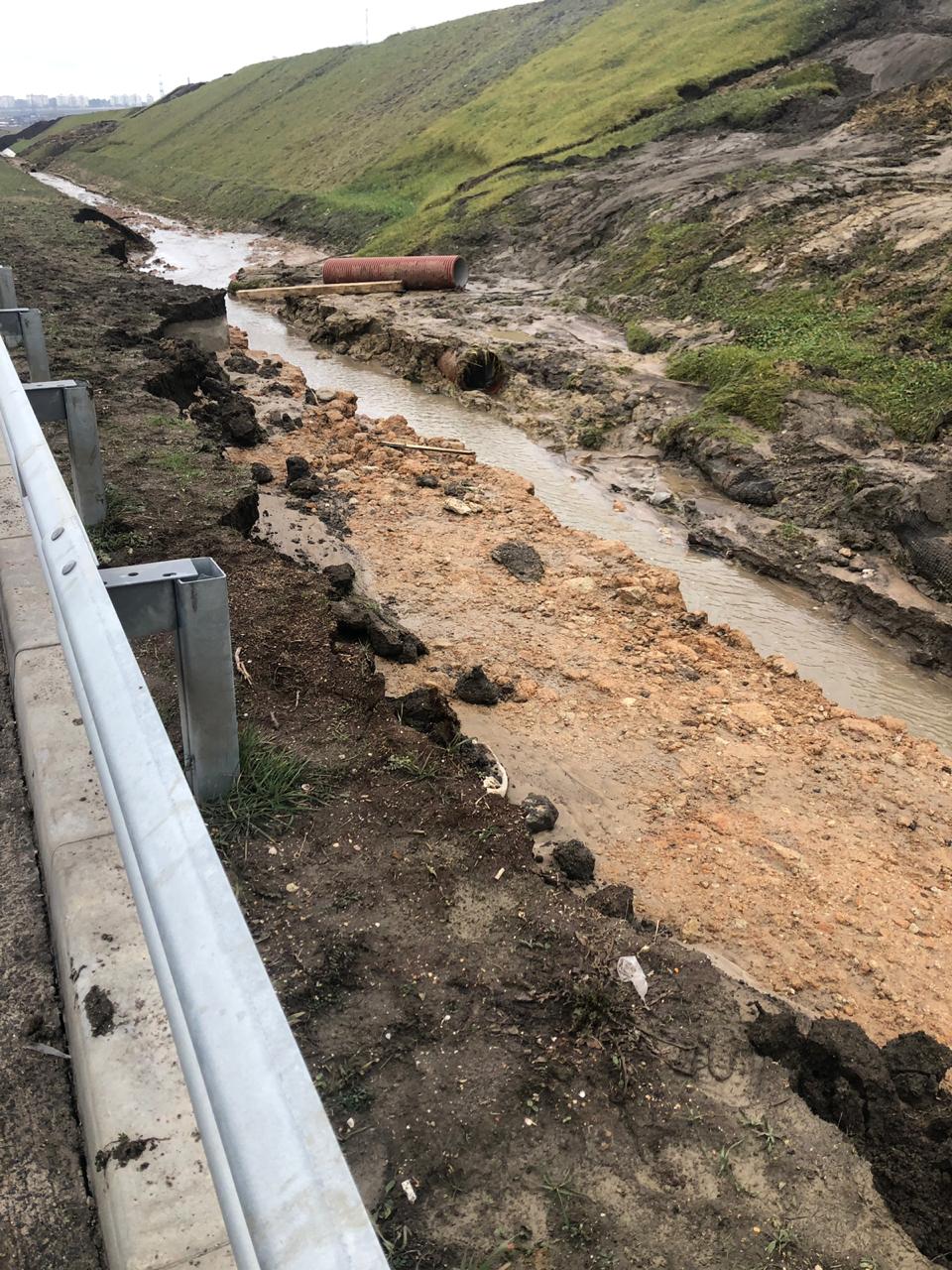
Ground movement along an access road to the Kerch Bridge.
In a letter dated 30 January 2019, the occupation authorities warned that continued ground movement could affect the entire carriageway and, in the worst case, halt traffic on the only access road. InformNapalm also published information from a construction inspection report dated 23 January, together with photographs documenting the damage. The investigation concerned the access road, not the steel arch that has now been destroyed. The documents nevertheless show that Russian authorities were aware of serious problems affecting parts of the connecting infrastructure as early as the bridge’s first year of operation.
Russian transport links to Crimea are affected
The approximately 19-kilometre-long Kerch Bridge connects Russia’s Krasnodar region with the occupied Crimean Peninsula. The road link was inaugurated in 2018, and the railway link opened later. Construction began following Russia’s illegal annexation of the peninsula in 2014, and the bridge has since held considerable symbolic significance for the Kremlin. It has also been used to transport military personnel, ammunition, fuel and other materiel to Crimea and onwards to Russian occupation forces in southern Ukraine. Its importance to military logistics has, however, changed during the war. Russia now also uses the land corridor through occupied parts of southern Ukraine for extensive military transport operations.
The loss of a major road link places additional pressure on the railway and the remaining overland connections. The extent of the disruption to Russian transport operations will depend, among other factors, on the condition of the railway, the scope for rerouting traffic and the time required for reconstruction. Ukraine’s General Staff points out that Ukrainian forces have also targeted bridge links at Chonhar and Henichesk during the autumn. By attacking these links and the Kerch Bridge, Ukraine is seeking to restrict the Russian occupation forces’ ability to supply their units on the Crimean Peninsula and in southern Ukraine.
The fourth major attack on the Kerch Bridge
According to the SBU, the attack on 17 November was the fourth major operation conducted by the security service against the Kerch Bridge. The first took place in October 2022, when an explosive charge carried by a lorry detonated on the bridge. In July 2023, the SBU’s Sea Baby naval drones attacked the bridge supports. In June 2025, the security service conducted another operation in which explosive charges were placed at the bridge supports and detonated underwater.
Robert Brovdi, commander of Ukraine’s Unmanned Systems Forces and known as Magyar, has repeatedly warned Russian occupation forces that transport links to Crimea could be severed and urged them to leave the peninsula while it is still possible to do so by car. The attack comes as Russia continues to target Ukrainian infrastructure. During the night of 16–17 November, Russian strikes hit, among other targets, two bridges across the Dnipro River in Kyiv. President Zelenskyy has described the Ukrainian operation against the Kerch Bridge as a response to Russian attacks on Ukrainian transport links.
The destruction of the road arch has halted road traffic between Russia and occupied Crimea. The bridge, which the Russian leadership has used as a symbol of the annexation of Crimea, has once again proved vulnerable despite extensive Russian defences.
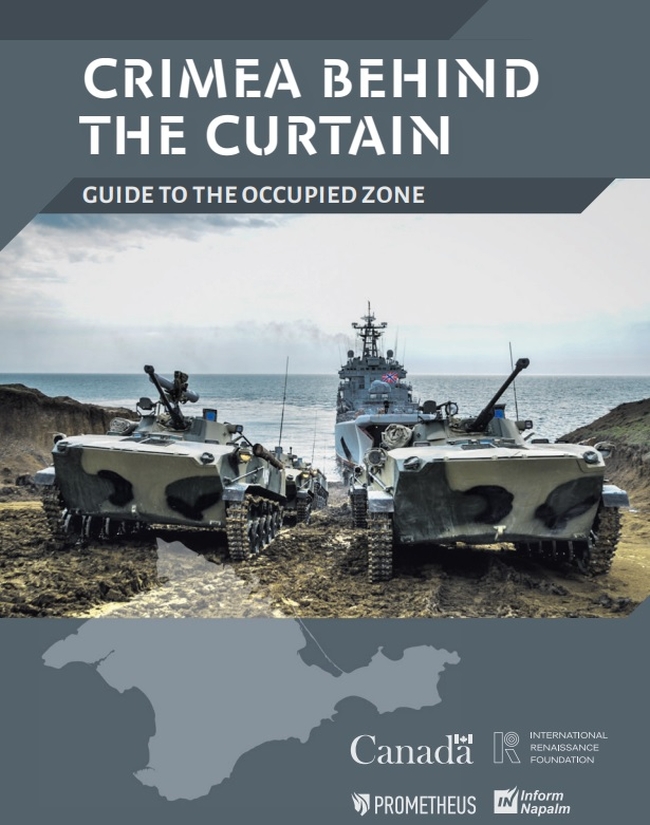
Further reading: Crimea Behind the Curtain – A Guide to the Occupation Zone (PDF), published by the Prometheus Centre.
Further articles by InformNapalm
 The material may be freely shared and republished provided that the source is credited. Licensed under Creative Commons Attribution 4.0 International (CC BY 4.0). Follow us on Facebook, X, Telegram and Slate (Sl8).
InformNapalm receives no financial support from any government or institutional sponsor. Its activities are funded exclusively through voluntary contributions from individual volunteers and readers. Those wishing to contribute can do so by making monthly small donations through the BuyMeACoffee platform.